May 15, 2026

Est 5 min
In this blog, you will discover:
- How accessible voting exists in theory, but not always in practice.
- Blind voters across Scotland are still experiencing inconsistent support at polling stations.
- A lack of staff training and misguided assumptions continue to undermine disabled people’s right to vote independently and in secret.
The very foundation of democracy is equality.
The right to vote independently and in secret should never depend on which polling station you attend, or whether staff happen to know how accessibility equipment works on the day.
Yet for many blind and partially sighted voters across Scotland, this is a familiar reality.
In this series, Passion4Social team members share personal experiences of inaccessible systems and services that continue to exclude disabled people, despite promises of progress.
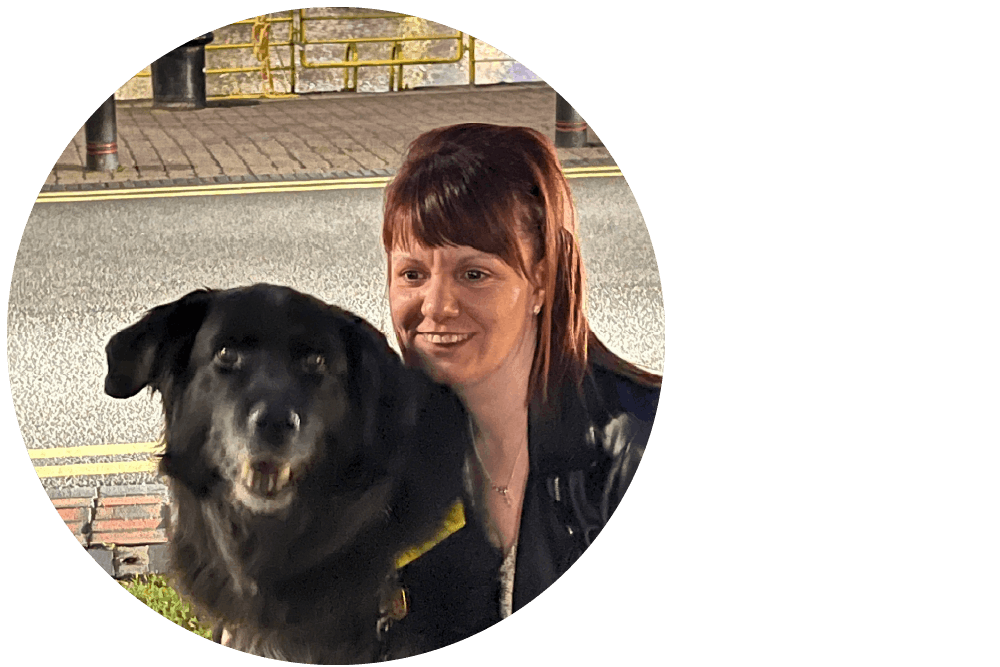
Following recent changes to voting accessibility measures in Scotland, our Lead Content Writer, Allana Grant, reflects on her experience voting in last Thursday’s Scottish elections — and why accessible voting still feels like a postcode lottery.
Promised independence, familiar disappointment
Ahead of the election, I wrote about Scotland’s introduction of tactile ballot overlays paired with audio ballot papers for blind and visually impaired voters.
For the first time in years, I felt cautiously optimistic about going to vote, like we might be on the cusp of meaningful change.
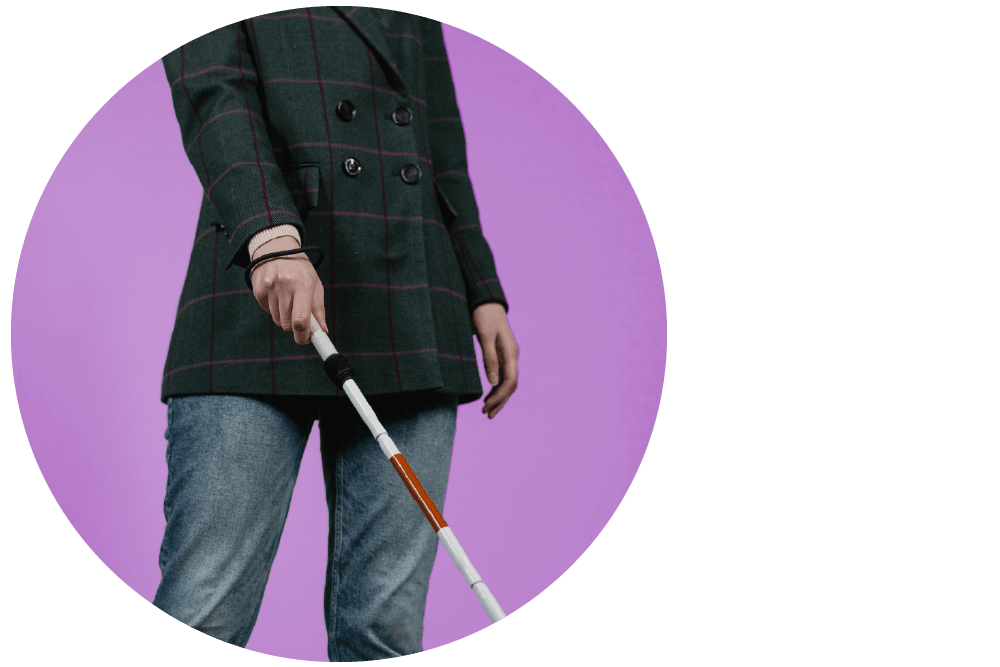
The concept itself is simple and effective, having been designed by people with lived experience of sight loss: a tactile guide fitted to the ballot paper is used in conjunction with an audio recording explaining the candidates and corresponding numbers, enabling blind people to cast their vote independently and in secret.
It is exactly the sort of solution many of us have been suggesting for years.
So, on Election Day, I arrived at my polling station hopeful that things had finally changed, but unfortunately, I was soon reacquainting myself with those old feelings of frustration and exclusion.
Within seconds of exchanging hellos, it became clear that polling staff had not received adequate training on how the system worked.
In fact, they were not even aware of its existence.
They showed me the new Braille ballot guides, but when I asked for the audio ballot, nobody knew how to access it.
Make no mistake, they did attempt to assist me wherever possible and could not have been more pleasant if they’d tried.
Phoning the election helpline, they were directed to the Electoral Commission, which then pointed them towards a broken link on North Lanarkshire Council’s website.
So after several minutes of awkward “You’d think they would…” and “I don’t understand why….”, I once again had to rely on my partner to cast my vote.
No secrecy, or independence; just a familiar feeling of dented expectations.

Same election, other side of the coin
Later, having visited my partner’s polling station, we asked the staff whether they knew about the new system.
Although they had heard of it, they also had no idea how to access the audio ballot.
Yet on the very same Election Day, a friend voting in Edinburgh had an entirely different experience.
As soon as she entered the polling station, staff approached her with an MP3 player where she could access the audio ballot.
The tactile guide was attached to the ballot paper with a paperclip, and she was directed straight to the booth to vote independently.
That experience just proves how efficiently the concept works.
It was, as I said, designed by people with experience of living with sight loss, and when implemented correctly, it provides exactly what disabled voters have been asking for: independence, privacy, and dignity.
The problem is inconsistent implementation.
Ending postcode policies
This is not a criticism of polling staff.
The people I encountered last Thursday genuinely wanted to make the process easy for me, but they had clearly not been given the training needed to support disabled voters properly.
Their lack of confidence really communicated itself to me.
Once again, we see how accessibility measures are introduced without effective, sustainable implementation plans behind them.
There also remains an underlying assumption that disabled people can simply rely on a companion to assist them with voting, but what if someone does not have a partner or family member available to do that?
More to the point, why should they have to sacrifice their privacy and independence in the first place?
Disabled people deserve the same democratic rights as everyone else.
The right to vote independently and in secret should not be aspirational or well-meaning; it should be a given.
Right now, the only real secret around here is why accessible voting in Scotland is still a postcode lottery for disabled voters.
Read more from this series:
Share via social media:


You may also like...

10 simple steps to writing accessible content
Learn how to make your content easier to find, understand,...

Teaching digital accessibility early: The future of inclusive education
In this article: Why accessibility should be integrated in education...
Accessibility beyond websites: The rise of accessible everything
In today’s blog, you will read about: How digital accessibility...

Accessible Content Does Not Need to Be Dull
Who says accessible content has to be boring? Some people...

Digital Accessibility in Action: The Platforms, Creators and Advocates Amplifying Disabled Voices
As we tell anyone who will listen, creating accessible digital...

What you need to know about WCAG 3.0
October 28, 2026 , 12 pm - 1 pm GMT

Accessible images: The art of alt text
November 25, 2026 , 12 pm - 1 pm GMT

Overlays vs lived experience users: Shortcut or setback?
Explore the arguments for two powerful approaches to digital accessibility: the convenience of automated overlays...

When “Save as PDF” isn’t enough: Why accessible PDFs require knowledge, planning, testing and time
In this article, you will discover: Polished-looking PDFs are not...

The EAA one year on: What has really changed?
In this blog, you will read about: What has really...

The sales you never got to see and why digital accessibility could be the reason
How sales can be lost without ever appearing in your...

Quick wins: 10 accessibility fixes you can implement now
In some circles, digital accessibility has a bad reputation, but...

The European Accessibility Act
A practical guide to the European Accessibility Act, explaining what...

Exploring assistive tech in cyber security tools
With CYBERUK 2026 on the horizon, Net-Defence and Passion4Social CIC...

Who is being left behind? The entry point is digital
Digital inaccessibility is a significant structural barrier that widens the...

When accessibility is an afterthought: Patients pay the price
Government organisations and institutions spend millions on cybersecurity, protecting their...

Accessibility Quiz
Our quiz assesses accessibility maturity across strategy, testing, culture, and...

The Accessibility for All project: Creating paid digital careers for people facing exclusion
Just 5.5 million disabled people are in employment, yet more...

Digital Accessibility and the Law
Join Passion4Social for a practical 60-minute webinar exploring the intersection of digital accessibility and the...

Create, Test, Include – Accessible Documents
This webinar, which coincided with Global Accessibility Awareness Day (GAAD), will dive into how we...