• Skip to main content

Passion4Social

  • Home
  • Our Services
    • All Accessibility Services
    • Accessibility Audit Services
    • Accessibility Overlay
    • Accessible Websites
    • Accessible Marketing and Comms
    • FAQs
  • Our Impact
    • Impact
    • Impact reports
    • Our story
    • Our team
    • Join our Board
    • Lived Experience freelancers wanted
  • Engage and Learn
    • Free webinars
    • Blog
    • Ebooks
  • Contact
You are here:
Engage and learn - When accessibility is an afterthought: Cupid’s arrow never flies true
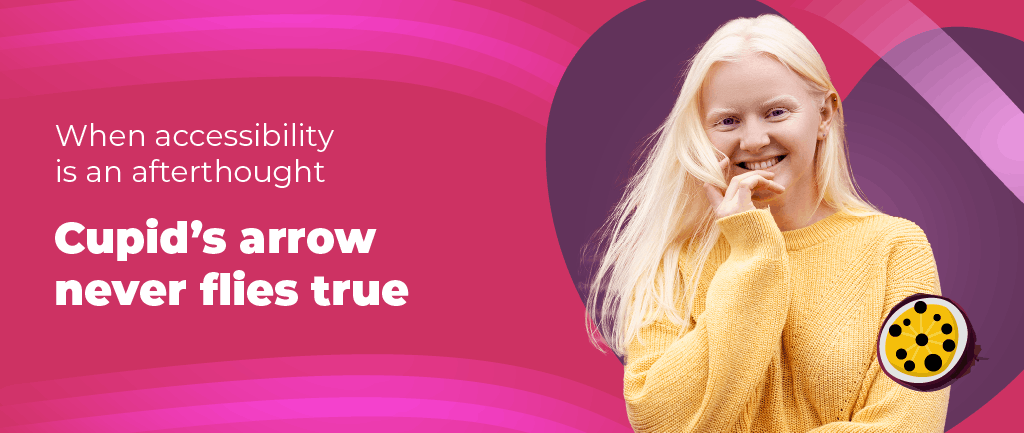
A smiling person wearing a yellow jumper, with one hand raised to their face against a purple heart shape and a pink background. Text reads: ‘When accessibility is an afterthought: Cupid’s arrow never flies true.’.

When accessibility is an afterthought: Cupid’s arrow never flies true

Passion4Social

February 23, 2026

Est 5 min

Love was never the problem.

Every February, the world fills with hearts, romantic promotions, public declarations, and campaigns celebrating love.

Restaurants create special menus, brands invest in emotional storytelling, and digital platforms become showcases of affection.

The message is clear: love is universal.

However, this sense of universality begins to unravel when we look more closely at who is actually able to take part in these experiences, both in the physical world and online.

Can everyone really participate?

The truth is simple, although often ignored: disabled people date, fall in love, experience desire, build relationships, and celebrate special occasions just like anyone else.

The problem has never been a lack of interest.

The problem has always been access.

two people embracing happily with houseplants in the background.

When romance was not designed for everyone

Imagine trying to book a special dinner and discovering that the restaurant website does not work with a screen reader.

Imagine arriving at the venue and realising there is no proper access, no readable menu, and no staff prepared to meet diverse needs.

Now imagine trying to buy a Valentine’s gift online, but the navigation is confusing, the buttons are not identifiable, or the payment process simply does not work without a mouse.

These situations are not exceptions, and this realisation is deeply upsetting.

They are part of everyday life for many disabled people.

Yet they continue to be treated as isolated issues, when in reality they reveal something much bigger: accessibility is still seen as a late adjustment, not an essential part of the experience.

two smiling people looking into each other’s eyes. The first person is crouching down and taking the second person, a wheelchair user’s, hands in theirs.

The myth that refuses to disappear

There is a quiet but deeply rooted myth suggesting that disabled people are not interested in dates like Valentine’s Day.

As if romance, desire, and intimacy were privileges reserved for bodies considered “standard”.

This myth is comfortable for those who design experiences.

It justifies exclusion.

It turns lack of access into an assumed lack of interest.

Yet reality disproves this narrative every single day.

Disabled people are not absent from romantic campaigns because they do not want to be there.

They are absent because they are rarely considered when these campaigns are created.

Companies and brands often avoid featuring disabled people in advertising because they believe it “stands out” in the wrong way.

two people sitting across from one another in a restaurant holding wine glasses, with a bouquet of flowers resting on the table. The first person is laughing as the second person, a wheelchair user, looks at them warmly.

The mirror between the physical and the digital

What is most revealing is how the physical and digital worlds reflect exactly the same patterns.

In physical spaces, we encounter restaurants without access, cinemas without appropriate resources, hotels that treat basic needs as exceptions, and marketing campaigns that exclude.

In the digital space, we see inaccessible websites, confusing applications, forms that cannot be completed, and content that completely ignores assistive technologies.

Something as common as the air we breathe.

In both cases, the message conveyed is the same: “This space was not designed for you.”

When this message is repeated on symbolic dates such as Valentine’s Day, the emotional impact becomes even deeper.

two people facing each other across a table with wine glasses. The first person is gesturing with their hands and the second person appears engaged in the conversation.

Accessibility is the minimum, not a romantic gesture

It is common to see brands investing in sophisticated emotional narratives while failing to ensure those narratives are accessible.

There is a lot of talk about connection, but very little about real inclusion.

Accessibility is not an act of kindness or a creative differentiator.

It is the foundation that allows any experience to be genuinely shareable.

When it is left until later, the result is not just technical frustration.

It is social exclusion, reinforcing the idea that certain bodies and lived experiences are still considered to be less worthy.

This is social hypocrisy in action, segregation that persists despite all technological progress and access to information.

two people embracing, smiling widely with their foreheads touching.

Loving also means being able to access

Celebrating Valentine’s Day should be about choices, not barriers.

About possible experiences, not blocked paths.

Regardless of someone else’s disability or needs, taking part in a particular activity or event to celebrate Valentine’s Day should be an individual choice, not the decision of others who think they know better.

Disabled people do not need to be told what love really is, or made to feel that they are living unfulfilled lives without it.

What they need are physical and digital environments that do not prevent them from living that love fully.

Perhaps the real challenge is not “including” disabled people in romantic narratives, but questioning why we continue to create experiences that only work for a few.

four pink, metallic balloons spelling the word ‘love’ against a yellow background. Between the V and the E is a single red rose.

An invitation to rethink what we call love

If love is universal, access must be too.

Do you agree?

While accessibility continues to be treated as a minor detail, we will keep reinforcing the idea that some people are excluded from the moments that should belong to everyone.

On Valentine’s Day, and on every other day, accessibility should not be an afterthought.

It should be the starting point.

Reflect and tell us: why do we not all have the right to belong, if we are all equal and love is universal?

What can you, as an individual or as an organisation, do to make the idea of equality and universal love truly real?

Share via social media:

FacebookLinkedIn

You may also like...

Articles & Guides
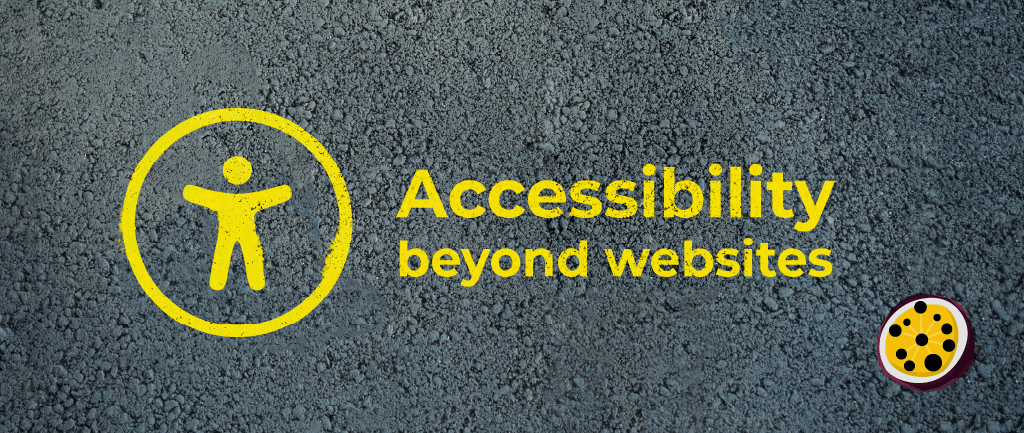
A dark grey, textured ground surface with a painted yellow accessibility icon. Painted yellow text reads: ‘Accessibility beyond websites.’ Passion4Social (logo).

Accessibility beyond websites: The rise of accessible everything

In today’s blog, you will read about: How digital accessibility...

Accessibility Digital Inclusion
Read article Accessibility beyond websites: The rise of accessible everything
Articles & Guides
Accessibility does not need to be dull – Quiz

Accessible Content Does Not Need to Be Dull

Who says accessible content has to be boring? Some people...

Quiz Accessibility Digital Inclusion
Read article Accessible Content Does Not Need to Be Dull
Articles & Guides
Amplifying disabled voices — Disability Pride Month, illustrated with a megaphone graphic

Digital Accessibility in Action: The Platforms, Creators and Advocates Amplifying Disabled Voices

As we tell anyone who will listen, creating accessible digital...

Accessibility Digital Inclusion
Read article Digital Accessibility in Action: The Platforms, Creators and Advocates Amplifying Disabled Voices
Upcoming free webinar
What you need to know about WCAG 3.0

What you need to know about WCAG 3.0

October 28, 2026 , 12 pm - 1 pm GMT

WCAG Accessibility Digital Inclusion
Register What you need to know about WCAG 3.0 (Opens in a new window)
Upcoming free webinar
A person holding an SLR camera up to their eye, looking through the lens and smiling against a teal background with a halftone pattern and purple circles. Text reads: ‘Accessible images: The art of alt text. Wednesday 25th of November, 12 pm GMT.’ Passion4Social (logo).

Accessible images: The art of alt text

November 25, 2026 , 12 pm - 1 pm GMT

Accessibility Digital Inclusion
Register Accessible images: The art of alt text (Opens in a new window)
Upcoming free webinar
A person with a prosthetic arm, posing confidently with their arms crossed and a warm smile against a pink background. Text reads: ‘Overlays vs lived experience users: Shortcut or setback? Wednesday 26th of August, 12 pm BST.’ Passion4Social (logo)

Overlays vs lived experience users: Shortcut or setback?

August 26, 2026 , 12 pm - 1 pm BST

Accessibility Digital Inclusion
Register Overlays vs lived experience users: Shortcut or setback? (Opens in a new window)
Articles & Guides
A person using a laptop computer at a wooden desk. Overlapping the laptop screen is a grey and white sad face graphic and a pink document graphic that reads: ‘PDF’. Passion4Social (logo).

When “Save as PDF” isn’t enough: Why accessible PDFs require knowledge, planning, testing and time  

In this article, you will discover: Polished-looking PDFs are not...

PDFs Accessibility
Read article When “Save as PDF” isn’t enough: Why accessible PDFs require knowledge, planning, testing and time  
Upcoming free webinar
A person holding a mobile phone and looking down at the screen with a serious expression against a teal background. Text reads: Digital poverty: Its impact and strategies for the future. Wednesday 23rd of September, 12 pm BST. With guests: Department for Work & Pensions, Lead Scotland. Passion4Social (logo)

Digital poverty: Its impact and strategies for the future

September 23, 2026 , 12 pm - 1 pm BST

Digital Inclusion
Register Digital poverty: Its impact and strategies for the future (Opens in a new window)
Articles & Guides
A laptop computer open on a desk. The screen displays the flag of the European Union with a white accessibility icon and ‘EAA’ at the centre. Passion4Social (logo).

The EAA one year on: What has really changed?

In this blog, you will read about: What has really...

Accessibility
Read article The EAA one year on: What has really changed?
Articles & Guides
A yellow background with a shopping cart. A white bar with a cursor reads: ‘Continue?’

The sales you never got to see and why digital accessibility could be the reason

How sales can be lost without ever appearing in your...

Accessibility
Read article The sales you never got to see and why digital accessibility could be the reason
Articles & Guides
When accessibility is an afterthought – Part 5" — hand placing a ballot in a box

When accessibility is an afterthought: Voting remains a postcode lottery for disabled voters

In  this blog, you will discover: How accessible voting exists...

Accessibility
Read article When accessibility is an afterthought: Voting remains a postcode lottery for disabled voters
Articles & Guides
Graphic with the text '10 quick accessibility wins' alongside a universal accessibility icon

Quick wins: 10 accessibility fixes you can implement now

In some circles, digital accessibility has a bad reputation, but...

Accessibility
Read article Quick wins: 10 accessibility fixes you can implement now
Accessibility Digital Inclusion
ebook cover for The European Accessibility Act

The European Accessibility Act

A practical guide to the European Accessibility Act, explaining what...
Download The European Accessibility Act
Articles & Guides
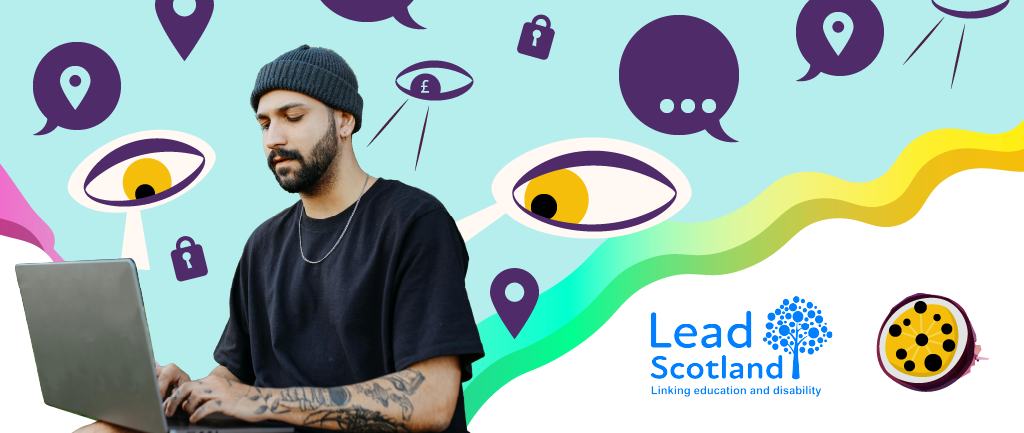
A man using a laptop is surrounded by eyes looking at his screen. There are location icons, speech bubbles and locks to symbolise online security. Lead Scotland and Passion4Social logos

Considering diversity in cyber security: Designing inclusive systems for disabled and neurodivergent users

Cyber security is no longer something that works away unobtrusively...
Cybersecurity
Read article Considering diversity in cyber security: Designing inclusive systems for disabled and neurodivergent users
Articles & Guides
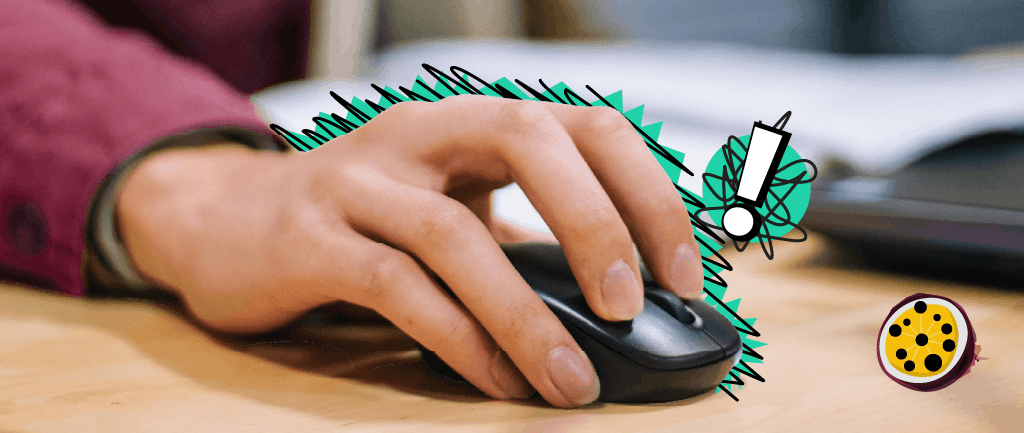
A hand using a computer mouse and a white exclamation mark are outlined with green and black jagged shapes. Passion4Social (logo).

When a click becomes exhausting: The hidden mental health cost of inaccessible design

Inaccessible digital design carries a hidden mental health cost, moving...
Read article When a click becomes exhausting: The hidden mental health cost of inaccessible design
Articles & Guides
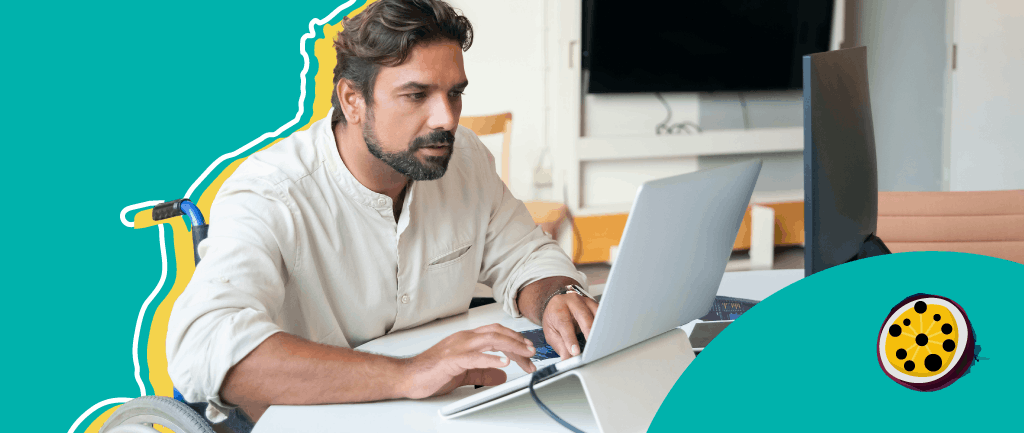
A person using a wheelchair while working on an open laptop computer against a teal background. Passion4Social (logo).

Technical expertise built on lived experience: Why our testers notice what others miss

Authentic accessibility goes beyond technical terminology or compliance with legal...

Read article Technical expertise built on lived experience: Why our testers notice what others miss
Articles & Guides
Illustrative depiction of neurodiversity showing colourful silhouettes of people and outlines of the human brain. Passion4Social (logo)

Exploring assistive tech in cyber security tools

With CYBERUK 2026 on the horizon, Net-Defence and Passion4Social CIC...

Accessibility Digital Inclusion
Read article Exploring assistive tech in cyber security tools
Articles & Guides
A group of three diverse women gathered around an open laptop computer, looking down at the screen and smiling. Passion4Social (logo)

Who is being left behind? The entry point is digital

Digital inaccessibility is a significant structural barrier that widens the...

Accessibility Digital Inclusion
Read article Who is being left behind? The entry point is digital
Articles & Guides
The torso of a person wearing a stethoscope around their neck and green medical scrubs. Bold black text against a yellow background reads: Patients pay the price

When accessibility is an afterthought: Patients pay the price

Government organisations and institutions spend millions on cybersecurity, protecting their...

Accessibility
Read article When accessibility is an afterthought: Patients pay the price
Articles & Guides
A person holding a laptop computer. They are looking at the screen, smiling widely and pumping their fist as if in celebration. A laptop graphic displaying a computer window reading ‘Accessibility Statement’. A graphic with two hands adjusting settings on the screen of a tablet device. 

Changing the narrative: All you need to know about accessibility services at Passion4Social

Once hailed as the great equaliser, the web has become...

Read article Changing the narrative: All you need to know about accessibility services at Passion4Social

Ready to take action?

The sooner you start on your accessibility journey, the sooner everyone can benefit from your inclusive online presence.

Start your accessibility journey
People and planet first logo with text underneath stating Verified social enterprise
Living hours employer logo
Cyber essentials certified logo
RNIB visibly better logo
Disability confident employer logo
Living wage employer logo
Edinburgh social enterprise network logo
Scottish union of supported employment SUSE logo
social firms Scotland logo
The good stuff community Edinburgh logo
National lottery community fund logo
Gsen Glasgow Social Enterprise Network logo
p4s_section-3_logo-ses

Back to top

Let's Connect

01506 353625 enquiries@passion4social.com

Copyright © 2025 Passion4Social

Socials

Subscribe
  • Privacy Policy
  • Terms and conditions
  • Sitemap
  • Accessibility Statement
Manage Cookie Consent
To provide the best experiences, we use technologies like cookies to store and/or access device information. Consenting to these technologies will allow us to process data such as browsing behaviour or unique IDs on this site. Not consenting or withdrawing consent, may adversely affect certain features and functions.
Functional Always active
The technical storage or access is strictly necessary for the legitimate purpose of enabling the use of a specific service explicitly requested by the subscriber or user, or for the sole purpose of carrying out the transmission of a communication over an electronic communications network.
Preferences
The technical storage or access is necessary for the legitimate purpose of storing preferences that are not requested by the subscriber or user.
Statistics
The technical storage or access that is used exclusively for statistical purposes. The technical storage or access that is used exclusively for anonymous statistical purposes. Without a subpoena, voluntary compliance on the part of your Internet Service Provider, or additional records from a third party, information stored or retrieved for this purpose alone cannot usually be used to identify you.
Marketing
The technical storage or access is required to create user profiles to send advertising, or to track the user on a website or across several websites for similar marketing purposes.
  • Manage options
  • Manage services
  • Manage {vendor_count} vendors
  • Read more about these purposes
View preferences
  • {title}
  • {title}
  • {title}