



March 14, 2025

Est 5 min
Imagine being unable to access important health information or get to that must-see gig, simply because the communications around it were not designed with you in mind.
For millions of people worldwide, powers of imagination aren’t needed.
This is their reality.
However, at Passion4Social, it’s a reality we are not willing to accept; especially as the status quo can so easily be changed, with empathy and a little more consideration.

Why inclusive communication matters
Creating a culture of inclusion does not begin and end with having a diverse mix of voices around your table. That’s just the start of your journey.
True inclusion is about creating an environment where everyone feels welcomed, respected, and heard. It also means ensuring everyone has equal access to opportunities to grow and contribute to society.
Inclusive communication is fundamental to achieving this.
Given the diverse world we live in, we naturally have different ways of thinking, processing information, and expressing ourselves.
Inclusive communication means sharing information in a way everyone can understand – whether written, digital, over the telephone, or face-to-face. When approached effectively, it recognises our diverse needs
Consequently, it is pivotal in building a society where everyone feels safe and can thrive. Inclusive communication:
- Ensures everyone feels valued and respected, regardless of their background.
- Creates spaces where diverse perspectives are welcomed.
- Empowers people to contribute to life’s important conversations.

The dangers of a world without inclusive communication
Everyone should have the right to understand and be understood. The COVID-19 pandemic starkly highlighted the consequences of failing to communicate inclusively. People with disabilities, particularly those with learning disabilities, were disproportionately impacted as they missed out on crucial health updates.
Information was often too complex, jargon-heavy, or unavailable in formats they could easily access/understand. For instance, some government guidance was only available in standard text, leaving behind people relying on Easy Read and audio formats.
Another example was the UK Government’s persistent refusal to provide British Sign Language interpreters at their daily briefings.
A lack of accessible communication that was frustrating and unnecessarily put lives at risk.

The case for inclusive communication
Did you know that organisations – businesses, public bodies, and charities – have a responsibility to communicate in a way that includes everyone?
That’s right, they are legally required to comply with accessibility regulations such as the Public Sector Bodies (Websites and Mobile Applications) Accessibility Regulations.
Organisations that don’t prioritise inclusive communication run the risk of legal challenges and long-term damage to their reputation.
Aside from that, the moral case for inclusion is quite simple: everyone deserves access to information that impacts their lives. Excluding people through poor communication is not only unfair – it actively creates barriers to participation in society.
This is something we are particularly passionate about rectifying, given our employees understand the frustration of being hampered from progressing in their careers, or other areas of daily life, simply because they cannot access communications.
Beyond the moral imperative, the business case also stands out a mile. Clear and accessible communication benefits everyone – not just people with disabilities, low literacy levels, or those who speak English as a second language. It improves the overall customer experience, boosts brand reputation, and even increases efficiency across the board.
Think about it.
If people can easily understand the information on your website, they are more likely to engage with your services and become loyal customers.
It’s as simple as this: embrace inclusivity and gain a competitive edge over your rivals, demonstrate your commitment to social responsibility and widen your audience reach.

Making communication inclusive with easy read
One proven technique for making communication more accessible is Easy Read. This method presents information in a clear, structured format, using simple language, short sentences, and supporting images to aid understanding.
Easy Read was first developed in the UK to support people with learning disabilities, but it is also now widely used by many others who find long or complex documents difficult to process. This includes people:
- With cognitive impairments
- With low levels of literacy
- Who have hearing or visual impairments
- Who speak English as a second language
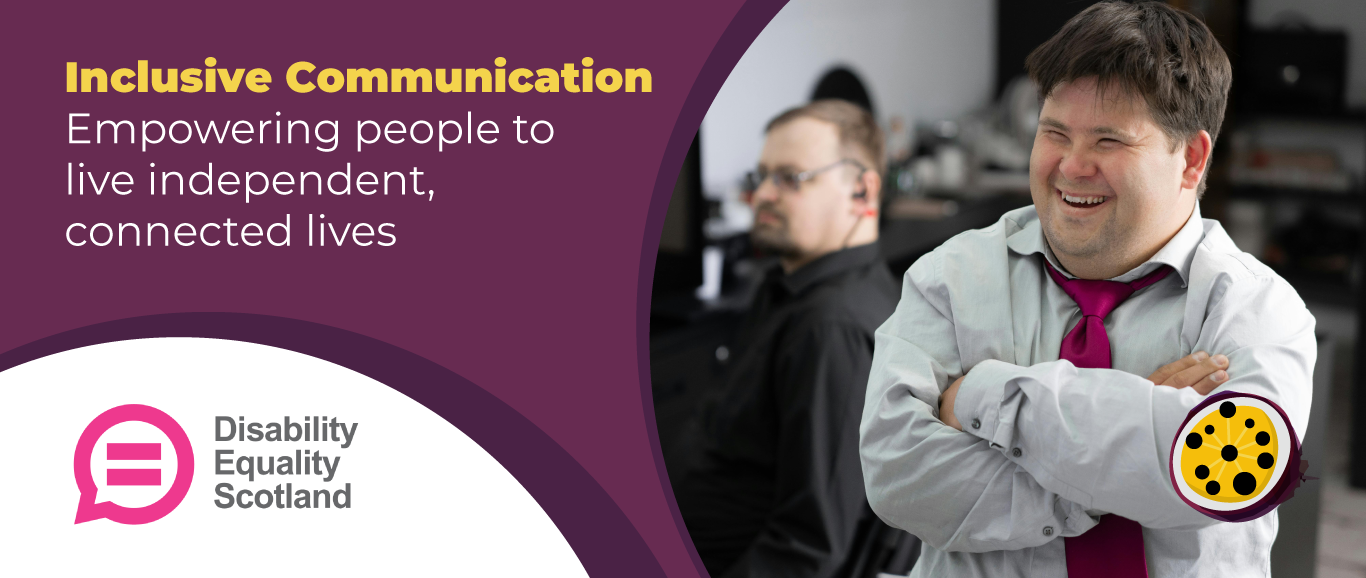
Disability Equality Scotland is a leader in the field of inclusion, producing Easy Read documents and training businesses to create their own publications.
We have been privileged to collaborate with them in recent weeks, particularly in the production of this blog, working together to achieve our shared mission of leaving no one behind.
Download ‘Make Your Information Accessible to Everyone’ (PDF), which explains Easy Read in greater depth and showcases Disability Equality Scotland’s expertise at its accessible best.
You can also find information on Disability Equality Scotland’s Easy Read CPD accredited training course.

Adopting an inclusive communication mindset
At Passion4Social, we know firsthand that inclusive communication is not just a nice thing to have; it is a necessity. It empowers people to live and work independently, make informed decisions, and stay connected with their communities.
That’s why it is at the core of our accessibility auditing services. We provide practical support and advice to organisations, ensuring their messages reach everyone, not just a select audience.
Our mission is to help them adopt an accessibility-first mindset that ultimately breaks down communication barriers and builds a fairer, more inclusive world.
Want to ensure everyone understands your important messages or can attend your must-see event? Email enquiries@passion4social.com today to learn more about our accessibility audit packages.
Alternatively, if you want to learn more about Disability Equality Scotland’s Easy Read services or plan to publish important information, email easyread@disabilityequality.scot.
Share via social media:


You may also like...

Teaching digital accessibility early: The future of inclusive education
In this article: Why accessibility should be integrated in education...

Accessibility beyond websites: The rise of accessible everything
In today’s blog, you will read about: How digital accessibility...

Accessible Content Does Not Need to Be Dull
Who says accessible content has to be boring? Some people...

Digital Accessibility in Action: The Platforms, Creators and Advocates Amplifying Disabled Voices
As we tell anyone who will listen, creating accessible digital...

What you need to know about WCAG 3.0
October 28, 2026 , 12 pm - 1 pm GMT

Accessible images: The art of alt text
November 25, 2026 , 12 pm - 1 pm GMT

Overlays vs lived experience users: Shortcut or setback?
August 26, 2026 , 12 pm - 1 pm BST

When “Save as PDF” isn’t enough: Why accessible PDFs require knowledge, planning, testing and time
In this article, you will discover: Polished-looking PDFs are not...

Digital poverty: Its impact and strategies for the future
September 23, 2026 , 12 pm - 1 pm BST

The EAA one year on: What has really changed?
In this blog, you will read about: What has really...

The sales you never got to see and why digital accessibility could be the reason
How sales can be lost without ever appearing in your...

When accessibility is an afterthought: Voting remains a postcode lottery for disabled voters
In this blog, you will discover: How accessible voting exists...

Quick wins: 10 accessibility fixes you can implement now
In some circles, digital accessibility has a bad reputation, but...

The European Accessibility Act
A practical guide to the European Accessibility Act, explaining what...
Considering diversity in cyber security: Designing inclusive systems for disabled and neurodivergent users
Cyber security is no longer something that works away unobtrusively...
When a click becomes exhausting: The hidden mental health cost of inaccessible design
Inaccessible digital design carries a hidden mental health cost, moving...
Technical expertise built on lived experience: Why our testers notice what others miss
Authentic accessibility goes beyond technical terminology or compliance with legal...

Exploring assistive tech in cyber security tools
With CYBERUK 2026 on the horizon, Net-Defence and Passion4Social CIC...

Who is being left behind? The entry point is digital
Digital inaccessibility is a significant structural barrier that widens the...

When accessibility is an afterthought: Patients pay the price
Government organisations and institutions spend millions on cybersecurity, protecting their...


