



October 20, 2025

Est 5 min
Digital accessibility, by definition, is a field that should be inclusive. After all, it is about ensuring that every person, regardless of their physical, sensory, or cognitive abilities, can access, understand, and interact with the digital world.
However, when we think about who is leading, innovating, and being recognised in these spaces, the absence of Black people — especially Black people with disabilities — is alarming. Technology, we are told, is neutral and progressive, yet it continues to carry the biases of a society that marginalises racialised bodies and ignores intersectionality.

The politics of digital accessibility.
The struggle for digital accessibility is not purely technical; it is also profoundly political. It is about who has the right to imagine the future, to build tools, to set standards, and to be heard.
When that future is designed primarily by white, non-disabled, cisgender people from Western countries, it tends to exclude those living at the margins.
The absence of Black people with disabilities in technological decision-making spaces is not a coincidence. It reflects structural barriers that begin in education, continue into the labour market, and are perpetuated through invisibility.
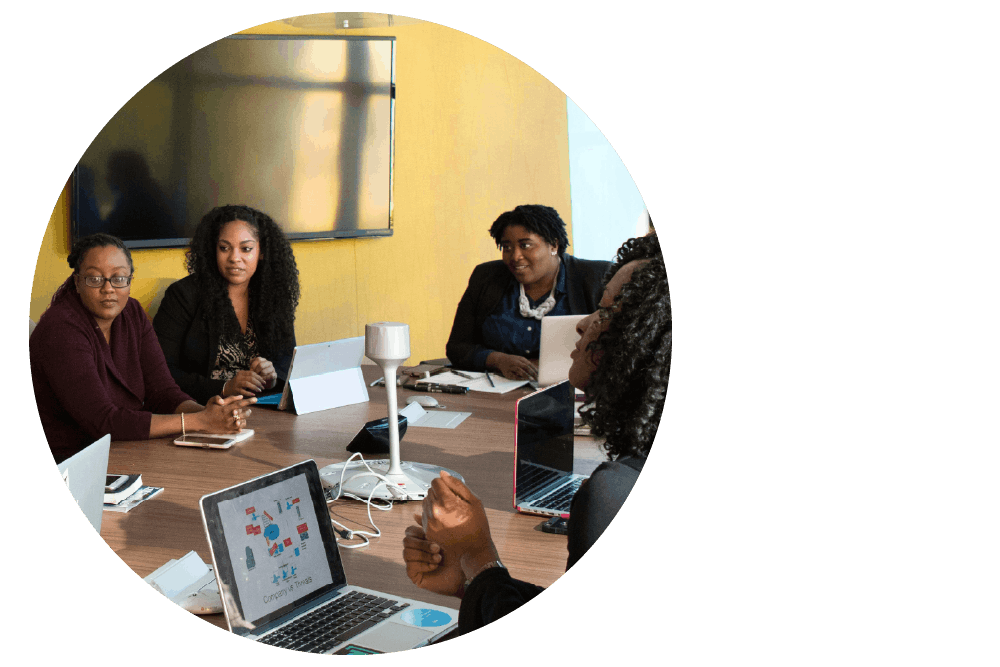
The black leaders transforming digital accessibility
Despite this persisting narrative, some names challenge this logic and prove that Black innovation exists, resists, and transforms:
- Dr Mark Dean, one of the inventors of IBM’s first personal computer, is a clear example of how Black brilliance has been fundamental to technological progress.
- Kimberly Bryant, founder of Black Girls Code, created a bridge for Black girls to enter the world of programming and computer science.
- Dr Timnit Gebru, a pioneering researcher in artificial intelligence ethics, exposed the racist biases embedded in algorithms and paid the price for her courage.
- Dr Marian Croak, responsible for advances in VoIP (Voice over Internet Protocol) and digital accessibility, is one of the few Black women in a senior technical leadership role at Google.
- Tatiana Mac, a critical designer, challenges aesthetic and functional standards that exclude racialised and marginalised people.
- Last but certainly not least, Haben Girma, the first Deafblind lawyer to graduate from Harvard, has become a global voice for inclusion and accessibility.

The very real cost of ignoring intersectionality
These names are beacons, but they are also exceptions. It is precisely because they are exceptions that they highlight the depth of exclusion. Black representation in technology remains minimal, and when we speak of Black people with disabilities, that representation becomes almost non-existent.
If we were to ask you to name other Black people, disabled or not, who have shaped or continue to shape the digital and accessibility fields, could you?
How many names would immediately spring to mind?
That is precisely the point.
Intersectionality (the recognition that different forms of oppression intersect and intensify one another) is too often ignored in discussions of digital inclusion. Accessibility is discussed without considering race. Diversity is discussed without considering disability. As a result, Black disabled bodies remain invisible.
This invisibility is not merely symbolic; it has practical consequences. When Black people with disabilities are absent from the creation of technology, their needs are overlooked.
Digital interfaces are designed without considering diverse modes of navigation. Algorithms reproduce racial and ableist prejudice. Facial recognition systems fail with Black faces. Communication platforms neglect sign languages and alternative descriptions. It is hardly surprising, then, that the digital world, which is meant to serve as a bridge, becomes yet another barrier to access.
Passion4Social: Bridging the digital access gaps
It is in this context that initiatives like ours become essential. Since 2018, operating across Scotland and the wider United Kingdom, Passion4Social has positioned itself as a creative agency with a purpose: to build a more equal, compassionate, and inclusive society, where the potential of disabled people and those from diverse backgrounds is recognised and valued. We do this through digital services, branding and content creation, video production, and accessibility audits.
All are designed to deliver social impact.
Our mission is rooted in values that acknowledge the complexity of inclusion. We believe that accessibility without diversity is incomplete; that innovation without justice is not innovation; that creativity is a tool for social transformation; and that every project is an opportunity to amplify marginalised voices.
By recognising and valuing Black innovators in digital accessibility, Passion4Social is not only celebrating individual brilliance but also pointing towards a possible future. A future in which Black people, with or without disabilities, are not exceptions but integral participants in technological development.
Our vision for an intersectional future
We all aspire to a future where digital accessibility is approached through the lens of intersectionality.
One where inclusion is not an afterthought but the starting point — the very element that sets true transformation apart when lived and practised daily.
This article is not based on vague, empty concepts.
It is an invitation for professionals, companies, and our country’s institutions to rethink their practices. It is a reminder that the struggle for inclusion is continuous, complex, and profoundly political.
Each Black name breaking barriers in technology is both a spark of transformation and a warning that there remains much to be done.
At Passion4Social, we believe that change begins with listening, courage, and commitment, and that every service provided can carry social value. Each project can serve as a bridge between worlds. By recognising and amplifying Black voices in digital accessibility, we are not only addressing historic injustices but also reshaping the future.
At the end of the day, accessibility is about belonging.
Yet, true belonging is only possible when all voices are heard, all stories are told, and everyone is respected.
Images courtesy of Disabled and Here and Women Of Colour in Tech.
Share via social media:


You may also like...
Teaching digital accessibility early: The future of inclusive education
In this article: Why accessibility should be integrated in education...

Accessibility beyond websites: The rise of accessible everything
In today’s blog, you will read about: How digital accessibility...

Accessible Content Does Not Need to Be Dull
Who says accessible content has to be boring? Some people...

Digital Accessibility in Action: The Platforms, Creators and Advocates Amplifying Disabled Voices
As we tell anyone who will listen, creating accessible digital...

What you need to know about WCAG 3.0
October 28, 2026 , 12 pm - 1 pm GMT

Accessible images: The art of alt text
November 25, 2026 , 12 pm - 1 pm GMT

Overlays vs lived experience users: Shortcut or setback?
August 26, 2026 , 12 pm - 1 pm BST

When “Save as PDF” isn’t enough: Why accessible PDFs require knowledge, planning, testing and time
In this article, you will discover: Polished-looking PDFs are not...

Digital poverty: Its impact and strategies for the future
September 23, 2026 , 12 pm - 1 pm BST

The EAA one year on: What has really changed?
In this blog, you will read about: What has really...

The sales you never got to see and why digital accessibility could be the reason
How sales can be lost without ever appearing in your...

When accessibility is an afterthought: Voting remains a postcode lottery for disabled voters
In this blog, you will discover: How accessible voting exists...

Quick wins: 10 accessibility fixes you can implement now
In some circles, digital accessibility has a bad reputation, but...

The European Accessibility Act
A practical guide to the European Accessibility Act, explaining what...
Considering diversity in cyber security: Designing inclusive systems for disabled and neurodivergent users
Cyber security is no longer something that works away unobtrusively...
When a click becomes exhausting: The hidden mental health cost of inaccessible design
Inaccessible digital design carries a hidden mental health cost, moving...
Technical expertise built on lived experience: Why our testers notice what others miss
Authentic accessibility goes beyond technical terminology or compliance with legal...

Exploring assistive tech in cyber security tools
With CYBERUK 2026 on the horizon, Net-Defence and Passion4Social CIC...

Who is being left behind? The entry point is digital
Digital inaccessibility is a significant structural barrier that widens the...

When accessibility is an afterthought: Patients pay the price
Government organisations and institutions spend millions on cybersecurity, protecting their...


