



March 3, 2020

Est min
“She’s one in a million!”
Those are words most proud new parents would be delighted to hear right?
Sad to say however; it wasn’t my extraordinary cuteness the doctors were referring to in the days after my birth, but rather the congenital rare form of blindness that would change the course of our family’s life forever.
Retinal Dysplasia

Retinal Dysplasia is an eye disease which more often occurs in animals, -dogs for example-than humans.
In fact, my younger brother and I are two of around fifty cases in the whole of the UK to be diagnosed with the condition.
I will try my best to explain what retinal Dysplasia is in terms you might understand, but the nature of this rare disease means that information about it is limited and the few articles you can find, aren’t exactly what you would call good bedtime reading.
So here goes! 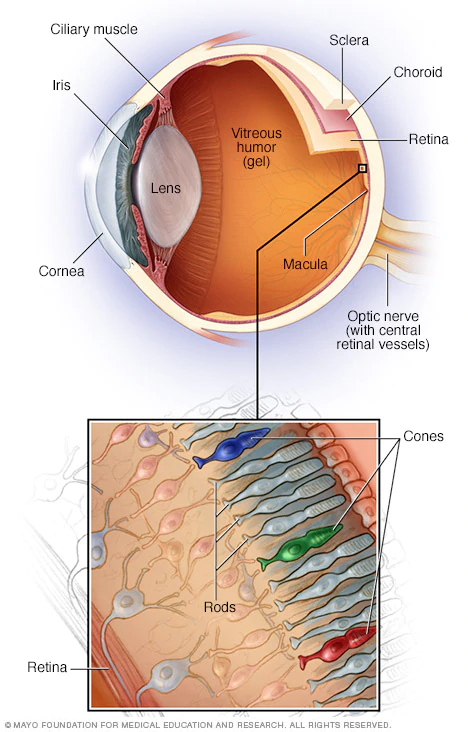
If you have perfectly functioning eyesight, your retina, a thin layer of tissue at the back of your eye, uses millions of light and other cells to receive and decipher visual information.
Once it has organised the information, it sends it to your brain via your optic nerve; enabling you to see.
In my case, this process doesn’t happen as it should because my retinas did not develop properly during my mother’s pregnancy.
Though Retinal dysplasia can have varying symptoms, my own strain of the disease has resulted in almost complete loss of vision in both eyes.
I am left with light perception, which is a little bit ironic, given that I am also photophobic as a result of the dysplasia.
No, although I do take a terrible photo; that is not a euphemism for being camera shy!
It just means I am allergic to bright light.
So, when the sun is splitting the trees, I can be found, hiding indoors like the vampire I am!
Finding a cure
Unless you count going out in odd shoes, or buying just one salad onion when I meant to buy a whole bunch, I try never to let my eye condition get in the way of living a full life.
Just like the dimple in my chin that looks like a bum, it is here to stay.
I see no point in becoming obsessed with negative thoughts.
Having said all of which; I wanted to share my story with you this Rare disease day to raise awareness of the condition.
As I said, knowledge of retinal dysplasia is still scant and The only hope of finding a cure lies in discovering how to transplant a whole eye.
Please share my story because the more we learn about this condition, the closer we get to finding that illusive treatment!
My intension was to include an image in this post, showing the effects of retinal dysplasia in humans, but I had no success finding one.
Check out Bella Rose’s video for a more in-depth insight:
Share via social media:


You may also like...
Teaching digital accessibility early: The future of inclusive education
In this article: Why accessibility should be integrated in education...

Accessibility beyond websites: The rise of accessible everything
In today’s blog, you will read about: How digital accessibility...

Accessible Content Does Not Need to Be Dull
Who says accessible content has to be boring? Some people...

Digital Accessibility in Action: The Platforms, Creators and Advocates Amplifying Disabled Voices
As we tell anyone who will listen, creating accessible digital...

What you need to know about WCAG 3.0
October 28, 2026 , 12 pm - 1 pm GMT

Accessible images: The art of alt text
November 25, 2026 , 12 pm - 1 pm GMT

Overlays vs lived experience users: Shortcut or setback?
August 26, 2026 , 12 pm - 1 pm BST

When “Save as PDF” isn’t enough: Why accessible PDFs require knowledge, planning, testing and time
In this article, you will discover: Polished-looking PDFs are not...

Digital poverty: Its impact and strategies for the future
September 23, 2026 , 12 pm - 1 pm BST

The EAA one year on: What has really changed?
In this blog, you will read about: What has really...

The sales you never got to see and why digital accessibility could be the reason
How sales can be lost without ever appearing in your...

When accessibility is an afterthought: Voting remains a postcode lottery for disabled voters
In this blog, you will discover: How accessible voting exists...

Quick wins: 10 accessibility fixes you can implement now
In some circles, digital accessibility has a bad reputation, but...

The European Accessibility Act
A practical guide to the European Accessibility Act, explaining what...
Considering diversity in cyber security: Designing inclusive systems for disabled and neurodivergent users
Cyber security is no longer something that works away unobtrusively...
When a click becomes exhausting: The hidden mental health cost of inaccessible design
Inaccessible digital design carries a hidden mental health cost, moving...
Technical expertise built on lived experience: Why our testers notice what others miss
Authentic accessibility goes beyond technical terminology or compliance with legal...

Exploring assistive tech in cyber security tools
With CYBERUK 2026 on the horizon, Net-Defence and Passion4Social CIC...

Who is being left behind? The entry point is digital
Digital inaccessibility is a significant structural barrier that widens the...

When accessibility is an afterthought: Patients pay the price
Government organisations and institutions spend millions on cybersecurity, protecting their...


