


September 25, 2023

Est min
Welcome to Are You Ableist?
This short quiz will help you reflect on your beliefs and attitudes towards abilities and disabilities. Let’s explore together and gain insights into fostering a more inclusive and understanding society. Start the quiz below!
Results


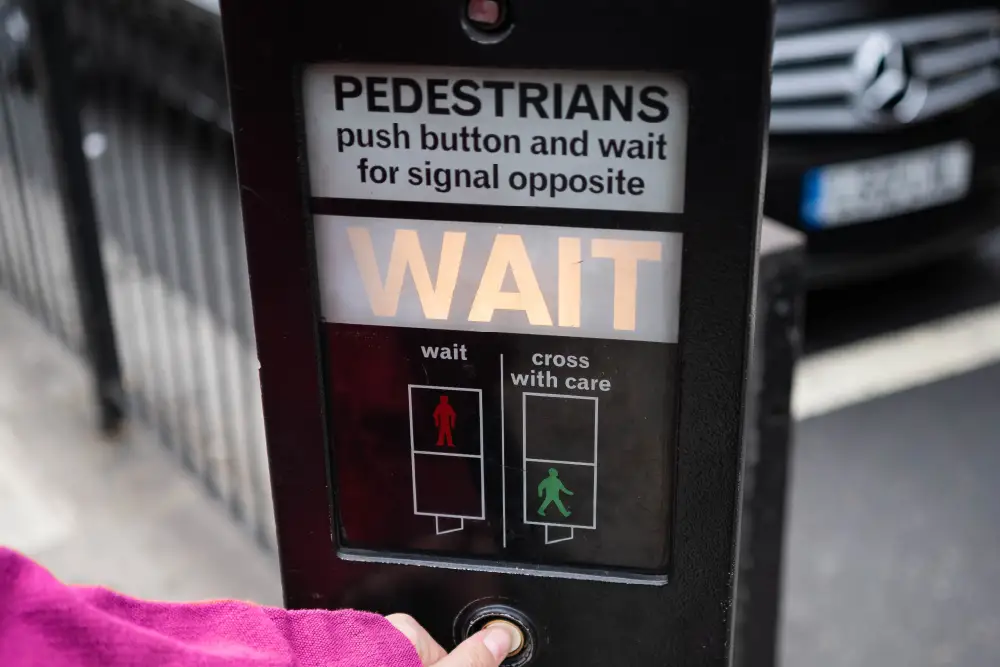
#1. You approach a busy crossing in the centre of town and you see a lady in a power wheelchair alongside the traffic light pole. It looks as if she might experience difficulty pressing the button, due to its awkward positioning. What do you do?
B. Ask her politely if she would like help.
Although you should guard against automatically assuming a disabled person needs help, there is nothing wrong with asking in a casual, polite manner; especially if you have spotted a clear access barrier, like the one described in the scenario above, or if you think the person is struggling.
The key thing to remember is to always respect the answer they give you.
You can’t possibly know their body, or capability better than them, so if they refuse help, just carry on with your own journey.

#2. One of your closest friends has just shared the news that he and his wife are expecting their third child later this year. The couple’s other two children have recently been diagnosed with autism, and the family is experiencing some financial pressures due to both parents only being able to work part-time hours. Do you:
B. Congratulate the couple and offer your services as chief babysitter if needed.
None of us are in a position to pass judgment on anyone’s ability to parent, and this is no less the case just because a child may be born with a disability.
It is also very arrogant/ableist to presume that the parents may view disability as a negative that has to be managed or overcome.
All new parents benefit from having strong support networks in place, and any offer to put your nappy-changing skills to the test will be welcome.

#3. You see an Instagram story about a teen with cerebral palsy who has been made captain of his school’s football team for the day. You share the story because you…..
B. Feel happy for the lad and keep scrolling.
Everyone loves a feel-good story, but that’s just what it is. The young lad is not inspirational just because he is disabled. You don’t have to elevate him for doing everyday activities and living his life. Neither should you feel the need to praise people for including him, as if they were in some way making a sacrifice.

#4. Your friend has set you up with a date. When you arrive, you see that your partner for the evening has a guide dog. What do you do?
B. Introduce yourself and see where the evening takes you.
Newsflash! Disabled people are just as into dating and relationships as non-disabled people!
They do all the same, everyday activities, have hobbies and, at the risk of telling you what you already know, want to be treated like everyone else on a first date.
So, go over and introduce yourself as you usually would (note, never speak to a working guide dog without permission. Not only does it put them off their work; it is a real turn-off for your date.). Anyway, once you introduce yourself, what’s the worst that can happen? There’s no spark and you don’t plan on seeing the person again, but hasn’t that happened before?
You chalked it up to experience and moved on, so why is this situation any different?
Anyway, it is more than likely that if you didn’t feel a connection, neither did they.

#5. You are sure you have found the perfect candidate to join your web design team, but they have requested you provide interview questions in advance because they have Tourette’s syndrome, and stressful environments trigger their ticks. What do you do?
A. Arrange for the interview questions to be sent a day in advance and call to ask if any other adjustments are needed.
Show the candidate that you recognise their support needs as much as any other person applying for the role.
Every candidate should have an equal chance to shine in an interview setting, and you should show that you are willing to make adjustments, where possible, to ensure they feel at ease.
It also shows that you understand that Tourette’s has no bearing on their ability to do the job or contribute to your team.
Finally, providing reasonable adjustments, like the one described above, is in line with the Equality Act 2010 which states that it is illegal to discriminate against people with protected characteristics, such as disability.

#6. Your partner uses a hoist and has booked an accessible room at the hotel you regularly visit together. When you arrive, they have given the accessible room away to another guest. How do you react?
B. Leave your partner to sort it out, unless asked to do otherwise, as they were the ones to make the booking in the first place.
Unless asked to do so, you should never speak for, or over, a disabled person. It is disrespectful, not to mention patronising, to presume that they somehow lack understanding of the situation, or have no authority to speak for themselves.
As we said before, trust that the person, in this case, your partner, understands their own needs and can communicate them clearly.
They may, when all is said and done, want your input i.e. if confrontation makes them feel uncomfortable, but wait for them to say so.
If a member of the hotel staff chooses to speak to you instead of your partner, stop them in their tracks and direct them to your partner who made the booking.
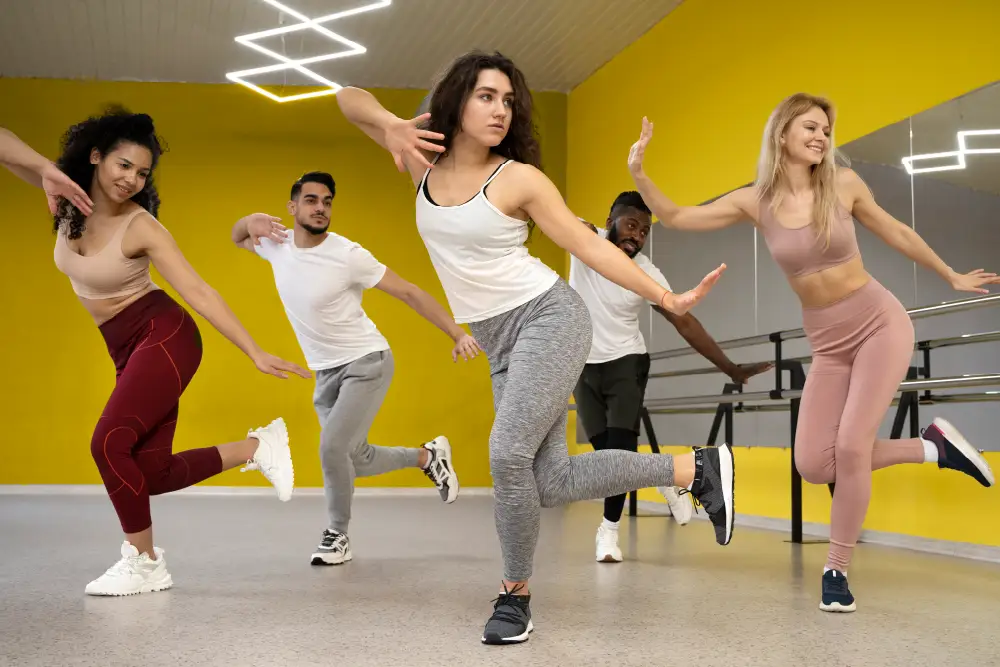
#7. You are excited about starting a new Performing Arts class but discover the teacher is deaf. What do you do?
A. Look forward to exploring new ways of learning and expressing your talents.
It goes without saying that the course tutor/teacher would not be in that position if they were not qualified.
The only difference is that the teacher will most likely use different strategies to communicate with you. We say most likely because, as with any disability, no two people experience deafness in the same way.
For example, some people have learnt to speak; whilst others use BSL and have an interpreter.
So, never assume you know what’s ahead of you, or that your learning experience is going to be somehow less.
Go along, ready to take everything in, because the likelihood is that you will see things from a perspective that never occurred to you before, and you will learn exciting new ways of self-expression.

#8. You are at a work’s night out and your colleague who has achondroplasia has turned up in the most amazing shoes you have ever seen. What do you say?
B. I love your shoes! Where did you get them?
Hold the front page! Disabled people love fashion and to feel good about what they are wearing, just as much as the next person.
Assuming that they don’t or can’t, is feeding into the narrative about their disability somehow making them less, and reinforcing the idea that they should be content with functional clothes.
Self-expression through fashion represents freedom for some people, in a world where they are limited by access barriers.
So go on, ask where she got those shoes. Not only will you have discovered a new way to get rid of your disposable income, but you might also discover accessible clothing hacks that work for you too.

#9. Driving round the supermarket car park, the only space that seems to be empty is a disabled bay. What do you do?
B. Do another circuit of the car park to find a space not reserved for people who need to stop close to the supermarket’s doors.
You shouldn’t park in a disabled bay, even just for a few minutes, because these spaces are critical for enabling some people to carry out activities that they just would not be able to do otherwise.
The distance to the supermarket door might not seem all that much to you, but for many people with severely limited mobility, i.e. those with chronic pain, wheelchair users or those who are registered blind, it could be a struggle that leaves them distressed and exhausted.
So, find a space further away, even if you are just dropping in to pick up a couple of things because you never know when that space will be needed.
You wouldn’t ignore someone’s need to use the bay if they were before your eyes, so don’t do it in their absence.

#10. You are the Head of HR and want to give the company’s employees greater autonomy over their own admin. You have created a monthly timesheet for them to fill in, but two of the team have come to you and said it is not accessible for them. What do you do?
B. Invite each of them for a chat to see what adjustments can be made.
Employers have a duty to make reasonable adjustments to their practices so that their disabled employees are not disadvantaged in any way and can carry out work to the best of their abilities.
When you are planning to implement new policies or practices, you should do so with flexibility in mind. No two people experience disability in the same way and consequently, they do not have the same access needs.
More to the point! Your disabled employees want/need/have a right to feel just as valued, included, and listened to, as their colleagues.
Inviting them in for a chat, about their access needs, gives them confidence that they can ask for what they need without fear of being seen as a troublemaker.
The likelihood is that the adjustments they require are as simple as having the timesheet in a different format, or a little training in using the existing one.

#11. You are making the most of a day off work, by spending a few hours at your local park. A young couple stroll past chatting animatedly. The lady is obviously visually impaired because she is using a cane to check for obstacles in front of her. What do you think?
B. Wonder what their secret is because you and your partner don’t do dates any more.
It goes without saying that disabled people have all the same desires and needs when it comes to love, sex or relationships as anyone else.
They are no less deserving of happiness, and neither are they to be seen as objects of pity who need looking after.
So best to avoid the assumption that he is either her carer or a relative.
Oh and dispense with the notion that relationships where one partner is disabled are one-sided too.
Just like any other healthy relationship, the pair you spot in the park fall out, fall back in, make compromises, love and support each other in different ways, share responsibilities, laugh and cry together, and most of all, create great memories to look back on.

#12. You and your friends are going clubbing for the night, but when you get to the venue, you discover there is no wheelchair access for your friend. What do you do?
B. Suggest you all go somewhere that does have accessible entry instead.
It is no more difficult to be a good friend to someone because they are disabled, but you do need to watch out for ableism creeping into certain situations like the one described above. Can we safely assume you know that asking your friend to go home so that everyone else can enjoy their night would be rude, hurtful, disrespectful and extremely ableist?
We won’t labour the point then.
As for getting into a confrontation with the managers: you might have the best intentions and want to stand up for your friend’s rights, but never assume that they would be happy for you to create a scene on their behalf. Speaking for, or over your friend just diminishes them in the eyes of the other people in the nightclub queue, and anyway, standing rowing is not suddenly going to make the premises more accessible.
Back your friend up by suggesting your group goes elsewhere; showing the nightclub owners that ignoring access needs will impact their bottom line.
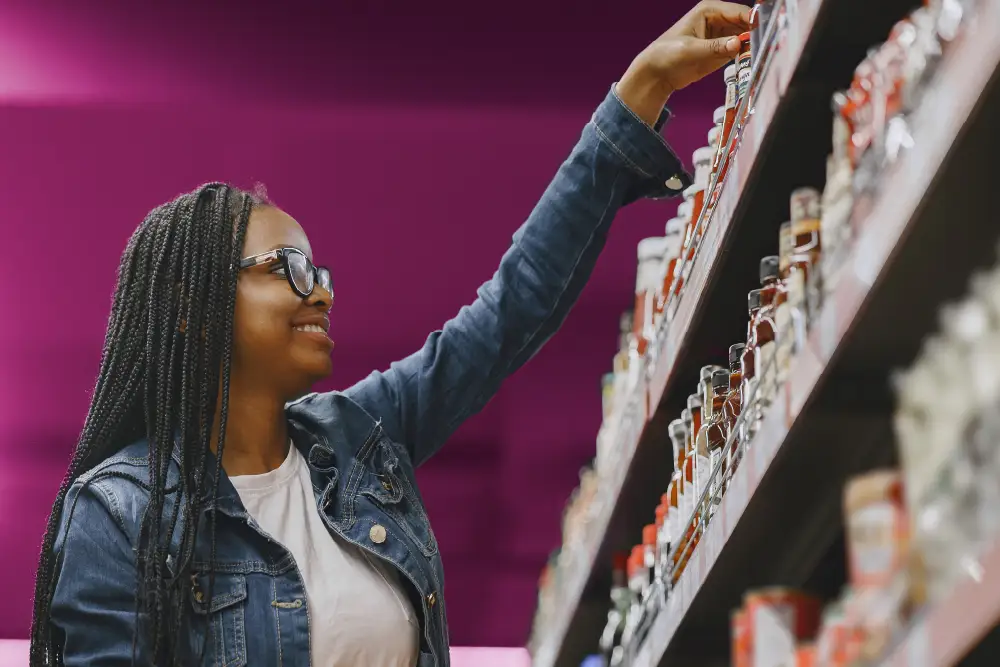
#13. You are at a supermarket and you see someone in a wheelchair struggling to reach something off a high shelf. Do you?
Either A. asking them if they need help or B. leaving them to ask a shop assistant for help is an acceptable answer.
Ideally, the disabled person would prefer to ask another customer or a shop assistant for help themselves. However, it is a judgement call, and if you are walking by a disabled person, who seems to be in need of assistance, and there is no one else around, it is acceptable to offer help.
After all, the disabled person can refuse help.
#14. You are out for a walk, and you see someone coming toward you using a mobility scooter. Do you:
Again, there is more than one answer here.
If it is a crowded street, answer C. stopping to let the person with the mobility scooter pass might be the safest option. However, in all other cases the correct answer would be B., just smile and say hello to them as they pass. You will just cause irritation by making a song and dance of leaving unnecessary space between the two of you.
Share via social media:


You may also like...
Teaching digital accessibility early: The future of inclusive education
In this article: Why accessibility should be integrated in education...

Accessibility beyond websites: The rise of accessible everything
In today’s blog, you will read about: How digital accessibility...

Accessible Content Does Not Need to Be Dull
Who says accessible content has to be boring? Some people...

Digital Accessibility in Action: The Platforms, Creators and Advocates Amplifying Disabled Voices
As we tell anyone who will listen, creating accessible digital...

What you need to know about WCAG 3.0
October 28, 2026 , 12 pm - 1 pm GMT

Accessible images: The art of alt text
November 25, 2026 , 12 pm - 1 pm GMT

Overlays vs lived experience users: Shortcut or setback?
August 26, 2026 , 12 pm - 1 pm BST

When “Save as PDF” isn’t enough: Why accessible PDFs require knowledge, planning, testing and time
In this article, you will discover: Polished-looking PDFs are not...

Digital poverty: Its impact and strategies for the future
September 23, 2026 , 12 pm - 1 pm BST

The EAA one year on: What has really changed?
In this blog, you will read about: What has really...

The sales you never got to see and why digital accessibility could be the reason
How sales can be lost without ever appearing in your...

When accessibility is an afterthought: Voting remains a postcode lottery for disabled voters
In this blog, you will discover: How accessible voting exists...

Quick wins: 10 accessibility fixes you can implement now
In some circles, digital accessibility has a bad reputation, but...

The European Accessibility Act
A practical guide to the European Accessibility Act, explaining what...
Considering diversity in cyber security: Designing inclusive systems for disabled and neurodivergent users
Cyber security is no longer something that works away unobtrusively...
When a click becomes exhausting: The hidden mental health cost of inaccessible design
Inaccessible digital design carries a hidden mental health cost, moving...
Technical expertise built on lived experience: Why our testers notice what others miss
Authentic accessibility goes beyond technical terminology or compliance with legal...

Exploring assistive tech in cyber security tools
With CYBERUK 2026 on the horizon, Net-Defence and Passion4Social CIC...

Who is being left behind? The entry point is digital
Digital inaccessibility is a significant structural barrier that widens the...

When accessibility is an afterthought: Patients pay the price
Government organisations and institutions spend millions on cybersecurity, protecting their...


