


January 6, 2025

Est 4 min
In December, we celebrated UK Disability History Month, an annual initiative dating back to 2010 that honours the history and contributions of disabled people in the UK. Within this diverse community, autistic individuals possess some of the most sought-after skills in today’s economy, yet they remain significantly underrepresented in our workplaces.
As we move into January and approach the International Day of Education on the 24th, it’s important to highlight the transformative power of inclusive education in building a more equitable society. Education is key for breaking down barriers faced by autistic individuals, not only in schools but also in preparing them for fulfilling careers.
At Passion4Social, we celebrate the unique perspectives, creativity, and innovative approaches our autistic employees bring to the workplace. We know that inclusion is not only the right thing to do but also a strategic advantage for creating a positive social impact. However, with only three in ten autistic people in employment, compared to eight in ten non-disabled individuals, there is still much work to be done.
So why are we still in a minority of businesses?
In Scotland, while awareness of autism and neurodiversity has grown, significant barriers remain for autistic individuals, both in education and employment. This underscores the importance of tailored strategies to ensure fairness, inclusion, and support for neurodivergent individuals, from classrooms to workplaces.
The spectrum of potential
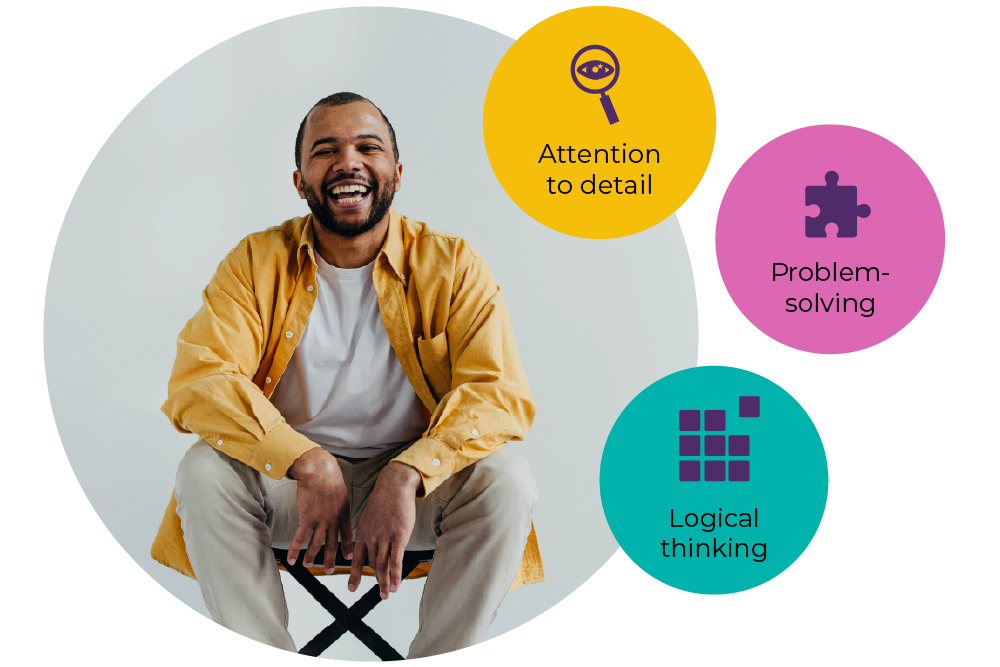
Autism is not an illness but a neurodevelopmental condition existing on a spectrum. Here in Scotland, over 1 in 100 people are autistic, each with their unique abilities, aspirations, and potential. Autistic individuals often excel in areas such as:
- Attention to detail
- Logical thinking
- Problem-solving
When recognised and nurtured, these strengths can be powerful assets in industries ranging from tech to design.

Challenges in employability
Perhaps the answer to the question posed earlier lies in the fact that autistic people continue to face obstacles during the recruitment process and in workplace integration.
Despite efforts to modernise, many companies and recruiters fail to update their accessibility practices in various areas, leaving autistic individuals struggling to overcome barriers, including:
- Traditional interview processes: Many interviews rely heavily on assessing social cues, body language and situational judgment. These aspects can disadvantage autistic individuals as they often have difficulty interpreting nonverbal communication or engaging in unstructured dialogue.
- Workplace stigma: Misconceptions about autism persist, with some employers failing to understand its spectrum nature. This lack of understanding can lead to inadequate accommodations or even discrimination.
- Limited access to support: Despite initiatives like Access to Work, which offers financial support for workplace adjustments, many small and medium-sized enterprises lack the knowledge or resources to provide necessary accommodations.

Fair Work Framework
Introduced in Scotland, the Fair Work Framework aims to address these issues by promoting workplaces prioritising respect, opportunity, and support for neurodivergent employees. Key principles include:
- Providing reasonable adjustments during recruitment and beyond.
- Ensuring that autistic individuals have a voice in workplace policies that affect them.
- Encouraging flexible working arrangements and structured environments that align with neurodivergent needs.

Practical steps for employers
- Adapt work environments: Simple changes, such as noise-reducing measures or clear, written communication, can significantly improve the workplace experience for autistic employees.
- Tailored job matching: Employers should focus on aligning tasks with individual strengths, such as problem-solving, attention to detail, or analytical skills.
- Training for teams: Educating managers and teams about autism promotes understanding and creates a culture of inclusion.

Successful models in practice
Initiatives like Employ Autism have demonstrated the impact of structured support. By providing training for employers and personalised career services for autistic individuals, the programme has improved employment rates and workplace inclusion.
Over 80% of programme participants reported feeling supported in their roles, showcasing the value of such interventions.

Conclusion
In conclusion, Scotland has made significant progress in promoting neurodiversity and helping more autistic people find jobs, unlocking their full potential.
However, we need to be aware that the employment gap for autistic individuals remains a pressing issue.
Overcoming this gap requires collaborative efforts from governments, employers, and communities to implement frameworks like Fair Work and scale successful models like Employ Autism.
By promoting inclusive workplaces that recognise and celebrate neurodiverse talents, Scotland can unlock the full potential of autistic individuals, benefiting both society and the economy, as we have experienced here at Passion4Social.
For further details and resources, you can visit organisations such as Different Minds, The National Autistic Society, or SWAN among others.
Share via social media:


You may also like...

Teaching digital accessibility early: The future of inclusive education
In this article: Why accessibility should be integrated in education...


Accessibility beyond websites: The rise of accessible everything
In today’s blog, you will read about: How digital accessibility...

Accessible Content Does Not Need to Be Dull
Who says accessible content has to be boring? Some people...

Digital Accessibility in Action: The Platforms, Creators and Advocates Amplifying Disabled Voices
As we tell anyone who will listen, creating accessible digital...

What you need to know about WCAG 3.0
October 28, 2026 , 12 pm - 1 pm GMT

Accessible images: The art of alt text
November 25, 2026 , 12 pm - 1 pm GMT

Overlays vs lived experience users: Shortcut or setback?
August 26, 2026 , 12 pm - 1 pm BST

When “Save as PDF” isn’t enough: Why accessible PDFs require knowledge, planning, testing and time
In this article, you will discover: Polished-looking PDFs are not...

Digital poverty: Its impact and strategies for the future
September 23, 2026 , 12 pm - 1 pm BST

The EAA one year on: What has really changed?
In this blog, you will read about: What has really...

The sales you never got to see and why digital accessibility could be the reason
How sales can be lost without ever appearing in your...

When accessibility is an afterthought: Voting remains a postcode lottery for disabled voters
In this blog, you will discover: How accessible voting exists...

Quick wins: 10 accessibility fixes you can implement now
In some circles, digital accessibility has a bad reputation, but...

The European Accessibility Act
A practical guide to the European Accessibility Act, explaining what...
Considering diversity in cyber security: Designing inclusive systems for disabled and neurodivergent users
Cyber security is no longer something that works away unobtrusively...

When a click becomes exhausting: The hidden mental health cost of inaccessible design
Inaccessible digital design carries a hidden mental health cost, moving...

Technical expertise built on lived experience: Why our testers notice what others miss
Authentic accessibility goes beyond technical terminology or compliance with legal...

Exploring assistive tech in cyber security tools
With CYBERUK 2026 on the horizon, Net-Defence and Passion4Social CIC...

Who is being left behind? The entry point is digital
Digital inaccessibility is a significant structural barrier that widens the...

When accessibility is an afterthought: Patients pay the price
Government organisations and institutions spend millions on cybersecurity, protecting their...


