


August 26, 2020

Est 4 min
A quarter century since the disability discrimination act was enshrined in UK legislation: 2020 should have been a time for commemoration, reflection, and making plans.
Instead, COVID-19 has thrown our social and economic landscape into turmoil.
As we look to a “new normal”, the question we are now asking is: how will it impact our continued fight for equal access and inclusion?
 Remote working
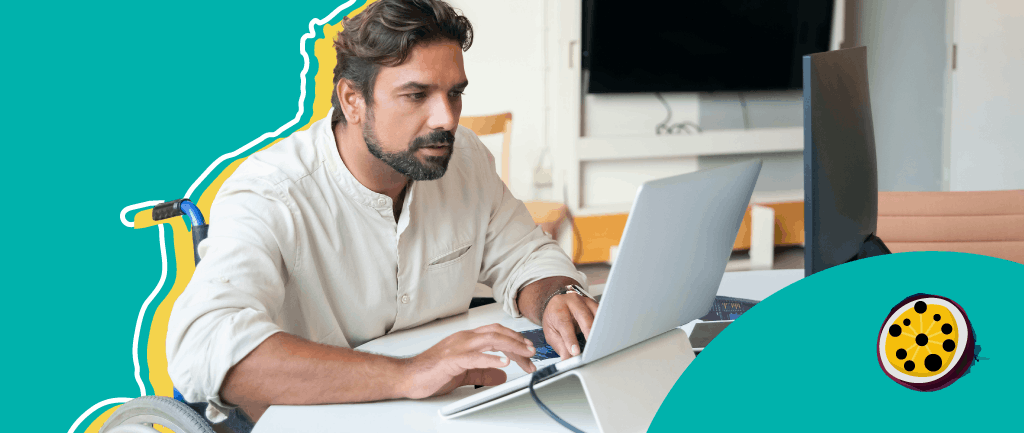
Remote working is often the only suitable option for many disabled and chronically ill people trying to enter or stay in employment.
Yet, until the outbreak of COVID-19, it was one reasonable adjustment the majority of employers were unwilling to consider.
It just isn’t manageable, or it wouldn’t fit in with the company’s working practices; the excuses were many and varied.
However, faced with the unthinkable prospect of not surviving the pandemic; home working has become the new norm for millions of workers – and in most cases, the transition was seamless.
So to recap: home working is not only possible; it increases productivity.
Not to mention the savings on time and running costs.
Funny! Haven’t we been pointing out the obvious for years?
Now, there’s no excuse to ignore a talent pool of 7.6 million.
 A more accessible social life
Ironically, the message to “stay home and save lives” has resulted in certain aspects of society opening up to disabled and chronically ill people for the first time ever.
Music venues, theatres, zoos, stately homes, whisky tastings, virtual sports, and even the world’s most famous attractions: the entertainment and creative industries have been forced to harness the power of technology to survive, and the events and sites it is now possible to experience from the comfort of our own homes are astonishing.
For many, that means no longer having to miss out on social events due to their body’s physical limitations or the constant pain they experience.
For others, still, no worrying about the barriers an inaccessible venue puts in their way.
Granted, the needs of disabled people were never at the forefront of these developments, but it does feel as if we have taken a step closer to the inclusive world we all dream of.
 Empathy not sympathy
The inaccessible design of our streets, buildings, and communal spaces often leaves disabled people struggling to get around safely, with many ending up largely housebound.
Design flaws which were literally brought home to our wider society as the pandemic took hold.
They got a taster of what it was like to be trapped indoors, despite being perfectly capable of contributing to society, and the result is greater empathy and understanding of the challenges of having limited mobility.
Let’s hope it translates into an increased willingness to listen to our voices in the future planning of infrastructure.
Fears of discrimination becoming commonplace again

Whilst there is optimism over some aspects of the “new normal”, it has become evident that the coming months will continue to hamper independent living.
Understandably, during the initial critical response to COVID-19, health and safety were the government’s priority – guidelines stated that local authorities should take a medical approach to managing disability, rather than the social model we have become used to.
Post-pandemic, there is a real fear that this way of thinking could become entrenched, setting disability rights back decades.
So we have to safeguard against encouraging a culture in business and service provision where assistance simply isn’t offered, and it is acceptable to put the onus back on the individual to solve their accessibility issues.
Failing to do so risks increased isolation as disabled people stop engaging with society.
All things considered
COVID-19’s legacy is a mixed bag.
On the one hand, society’s realisation that there is an alternative way of doing things should have a positive impact on the employment landscape, social inclusion and accessing certain services.
However, we will have to battle hard to ensure the “social” approach to disability is built on in the coming years, rather than being abandoned.
Share via social media:


You may also like...
Teaching digital accessibility early: The future of inclusive education
In this article: Why accessibility should be integrated in education...

Accessibility beyond websites: The rise of accessible everything
In today’s blog, you will read about: How digital accessibility...

Accessible Content Does Not Need to Be Dull
Who says accessible content has to be boring? Some people...

Digital Accessibility in Action: The Platforms, Creators and Advocates Amplifying Disabled Voices
As we tell anyone who will listen, creating accessible digital...

What you need to know about WCAG 3.0
October 28, 2026 , 12 pm - 1 pm GMT

Accessible images: The art of alt text
November 25, 2026 , 12 pm - 1 pm GMT

Overlays vs lived experience users: Shortcut or setback?
August 26, 2026 , 12 pm - 1 pm BST

When “Save as PDF” isn’t enough: Why accessible PDFs require knowledge, planning, testing and time
In this article, you will discover: Polished-looking PDFs are not...

Digital poverty: Its impact and strategies for the future
September 23, 2026 , 12 pm - 1 pm BST

The EAA one year on: What has really changed?
In this blog, you will read about: What has really...

The sales you never got to see and why digital accessibility could be the reason
How sales can be lost without ever appearing in your...

When accessibility is an afterthought: Voting remains a postcode lottery for disabled voters
In this blog, you will discover: How accessible voting exists...

Quick wins: 10 accessibility fixes you can implement now
In some circles, digital accessibility has a bad reputation, but...

The European Accessibility Act
A practical guide to the European Accessibility Act, explaining what...
Considering diversity in cyber security: Designing inclusive systems for disabled and neurodivergent users
Cyber security is no longer something that works away unobtrusively...
When a click becomes exhausting: The hidden mental health cost of inaccessible design
Inaccessible digital design carries a hidden mental health cost, moving...
Technical expertise built on lived experience: Why our testers notice what others miss
Authentic accessibility goes beyond technical terminology or compliance with legal...

Exploring assistive tech in cyber security tools
With CYBERUK 2026 on the horizon, Net-Defence and Passion4Social CIC...

Who is being left behind? The entry point is digital
Digital inaccessibility is a significant structural barrier that widens the...

When accessibility is an afterthought: Patients pay the price
Government organisations and institutions spend millions on cybersecurity, protecting their...


