


July 16, 2024

Est min
A victorious Labour, but are the winds of change blowing our way?
The removal vans have gone, wallpaper sample books adorn the coffee table of No.10’s flat and Sir Keir Starmer has a new place to call home for the next five years.
Who could fail to be impressed by that victory speech, promising change for the better and vowing to put country before politics?
Yet, when Sir Keir speaks about the “work of change his party is embarking on”, is he including the 16.1 million of us in the UK who live with a disability or long-term health condition?

A less-than-inclusive election campaign
Once again, people with disabilities largely felt ignored and invisible during the election campaign.
Late manifestos, inaccessible press conferences and a lack of inclusive literature were the order of the day, leaving little time to truly digest election promises and make informed choices at the polling station.
Though not the worst offender, the Labour Party were complicit in our community’s participation in the democratic process being so limited.
Sir Keir did not officially launch his manifesto for change until 13th June, allowing just three weeks for key proposals to be explored.
Neither was he accompanied on stage by a BSL interpreter.
However, online viewers did have access to one and the manifesto was made available in alternative formats such as easy read, Braille and audio.
Admittedly, Labour was also one of just three parties who responded to the Disabled People’s Organisations Forum when asked to complete their Disability scorecard before the election.
Yet, the answers were woolly, or lacking in detail altogether.
The overriding focus seemed to be on getting disabled people out of the benefits system, rather than the real societal inequalities holding us back.
Research from disability charity Sense showed this did little to dispel the notion that democracy is not for us.
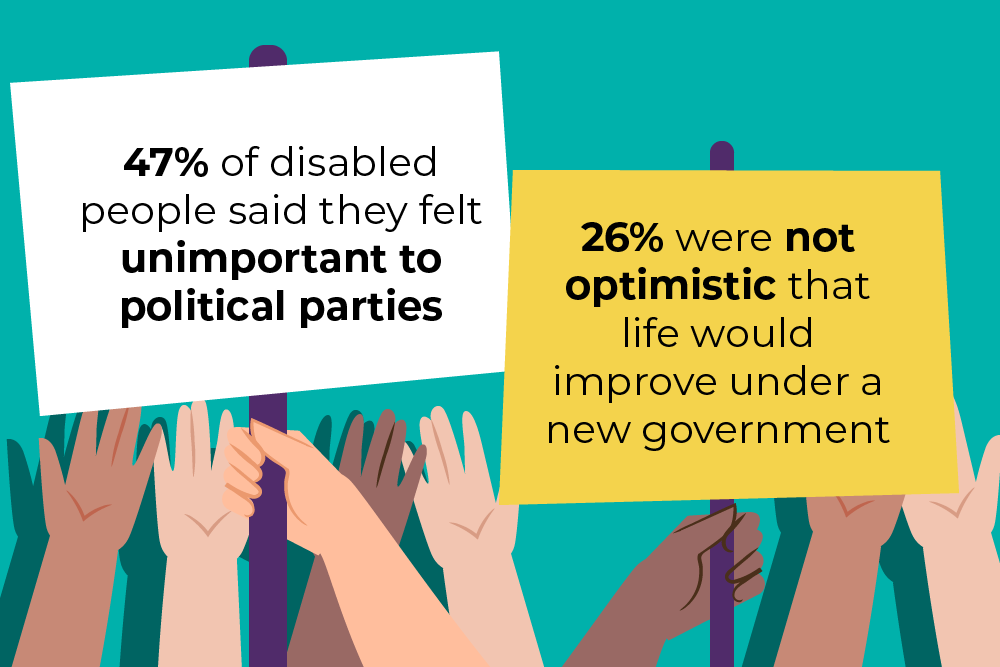
47% of disabled people said they felt unimportant to political parties and 26% were not optimistic that life would improve under a new government.
Labour’s promises
Plans to support more disabled people into work could represent Labour’s most significant commitment to our community, but only if they are overseen with empathy, dignity and respect.
It’s difficult to get too excited about the pledges on the table given that so much of the rhetoric from Labour has focussed on creating a welfare system underpinned by “rights and responsibilities” and “consequences” for people who don’t do their duty.
This has all too familiar rings of the previous administration’s determination to cut the benefits bill at any cost.
A promised review of the infamous Work Capability Assessment seems positive, on the surface at least, but sticking with a common theme, the details of Labour’s intentions remain scant. We need meat on the bones and quickly.
Pledging to reform the Access to Work scheme is a positive step.
Tackling the claims backlog, and cutting down on the needless bureaucracy that makes the scheme unfit for purpose would be key to driving down the Disability Employment Gap.
It has remained virtually static for decades, largely due to inconsistent, even non-existent employment support.
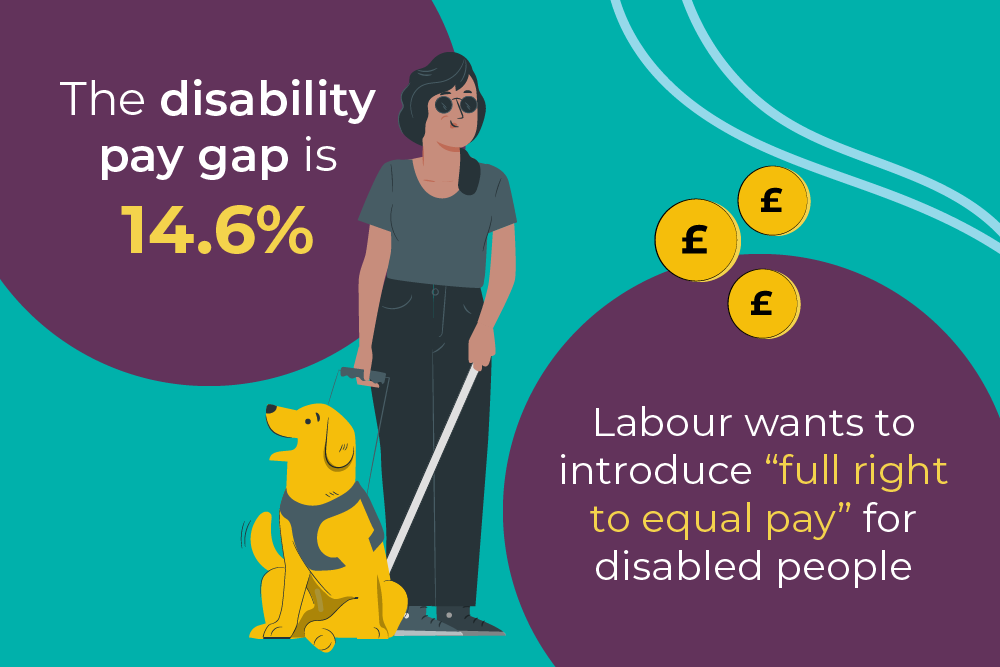
Perhaps the most encouraging of Labour’s pledges is to introduce the “full right to equal pay for disabled people”
And mandatory disability pay gap reporting.
As it stands, the disability pay gap is around 14.6% and these proposals signal the first real intent by any party in power to close it.
We’ve witnessed a degree of success with gender pay gap reporting and believe we will see a similar effect if organisations are held to account over disability pay.
We also feel a degree of optimism over pledges aimed at creating a better future for our children.
For example, improving access to mental health care (placing specialist professionals in every school) is vital to supporting their continued recovery from the pandemic and securing their equal life chances.
As with every demographic, disabled children were disproportionately impacted by Covid-19, the consequences of which are still being keenly felt.
Following on from that, a pledge to install Special Educational Needs (SEN) expertise in all mainstream schools is one we fervently hope comes to fruition.
Our children have been continually failed by a postcode lottery of service provision and successive governments’ lack of commitment to safeguarding their right to education.
Let’s see Labour put an end to this shameful discrimination.
What we hoped to hear from Labour, but didn’t
In the manifesto, we did see a commitment to reviewing the Universal Credit system to “make work pay and tackle poverty”, but once again, there is no real detail of what that might entail.
Ministers have vaguely spoken of PIP needing an overhaul, but the investment in social security that is sorely needed? Not a chance.
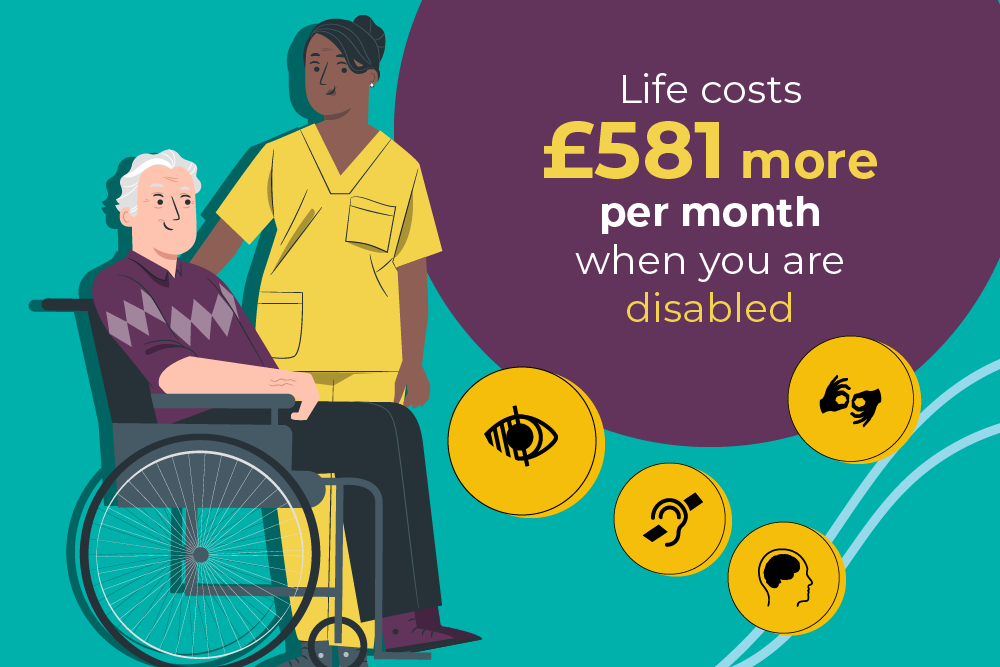
In fact, life costs more if you are disabled (£581 per month more) and we currently have the lowest benefits in all of Europe.
The disabled community was looking for the Labour Party to send a true signal of intent by promising to uplift disability benefits and safeguard access to others.
They’ve missed an opportunity to show that they care about our needs and understand the extra financial pressures people face, regardless of employment status in many cases.
Another lost opportunity was Labour’s failure to make provision for capping energy bills, a move which would have given reassurance to many households worrying about another stark winter ahead.
Instead, they face being penalised for needing extra energy and yet more agonising choices that no one should ever have to make.
Heating or eating, and staying in bed to save using a hoist or power wheelchair to get around; it’s not difficult to see why the majority of disabled people have little confidence that change is imminent.
Finally, we were deeply disappointed not to see a commitment to enshrine the UN Convention on the Rights of Persons with Disabilities (UNCRPD) in UK law.
Successive administrations’ obligations to disabled people’s rights have been lacklustre, allowing for flagrant discrimination, bureaucratic abuses and a culture where hate crime has been given room to flourish.
The last government was in fact asked to appear before the UN Council to answer for its own grave and repeated violations of the convention.
Our community had faith that Labour would stand with us, and make itself accountable for protecting our rights and dignity.
Thus far, this faith has been misplaced and the only party to show they had a true vision for equality was the Liberal Democrats.
Where’s our minister?
Having been swept into parliament on a huge majority, Sir Keir immediately got down to the business of assembling a cabinet.
However, the vacancy of Minister for Disabled People still sits unfilled and there has been a distinct silence from Labour on the subject.
Country before Party you said Sir Keir?
Where is the minister responsible for championing the rights and welfare of 16.1 million people?
We need assurance that the mistakes of the past won’t be repeated and that our voices will be heard and valued.
The jury’s out
We are looking to labour to tackle inequalities and deliver a transformational plan that will give our community the support, resources, and access it needs to thrive in today’s Britain.
However, to date, those winds of change are blowing ever so gently.
There are areas of the manifesto that give real cause for optimism, but we need to see urgency if Labour is to truly win our trust and confidence.
Share via social media:


You may also like...

Teaching digital accessibility early: The future of inclusive education
In this article: Why accessibility should be integrated in education...

Accessibility beyond websites: The rise of accessible everything
In today’s blog, you will read about: How digital accessibility...

Accessible Content Does Not Need to Be Dull
Who says accessible content has to be boring? Some people...

Digital Accessibility in Action: The Platforms, Creators and Advocates Amplifying Disabled Voices
As we tell anyone who will listen, creating accessible digital...

What you need to know about WCAG 3.0
October 28, 2026 , 12 pm - 1 pm GMT

Accessible images: The art of alt text
November 25, 2026 , 12 pm - 1 pm GMT

Overlays vs lived experience users: Shortcut or setback?
August 26, 2026 , 12 pm - 1 pm BST

When “Save as PDF” isn’t enough: Why accessible PDFs require knowledge, planning, testing and time
In this article, you will discover: Polished-looking PDFs are not...

Digital poverty: Its impact and strategies for the future
September 23, 2026 , 12 pm - 1 pm BST

The EAA one year on: What has really changed?
In this blog, you will read about: What has really...

The sales you never got to see and why digital accessibility could be the reason
How sales can be lost without ever appearing in your...

When accessibility is an afterthought: Voting remains a postcode lottery for disabled voters
In this blog, you will discover: How accessible voting exists...

Quick wins: 10 accessibility fixes you can implement now
In some circles, digital accessibility has a bad reputation, but...

The European Accessibility Act
A practical guide to the European Accessibility Act, explaining what...
Considering diversity in cyber security: Designing inclusive systems for disabled and neurodivergent users
Cyber security is no longer something that works away unobtrusively...
When a click becomes exhausting: The hidden mental health cost of inaccessible design
Inaccessible digital design carries a hidden mental health cost, moving...
Technical expertise built on lived experience: Why our testers notice what others miss
Authentic accessibility goes beyond technical terminology or compliance with legal...

Exploring assistive tech in cyber security tools
With CYBERUK 2026 on the horizon, Net-Defence and Passion4Social CIC...

Who is being left behind? The entry point is digital
Digital inaccessibility is a significant structural barrier that widens the...

When accessibility is an afterthought: Patients pay the price
Government organisations and institutions spend millions on cybersecurity, protecting their...


