




November 20, 2019

Est 3 min
For most of us, the run-up to Christmas is an expensive time of year.
Food, presents, the perfect decorations, the costs are quick to mount up; ditto the pressure to stay within your allotted budget.
So, how would you react if your boss informed you that you would be working the last 57 days of this year without pay?
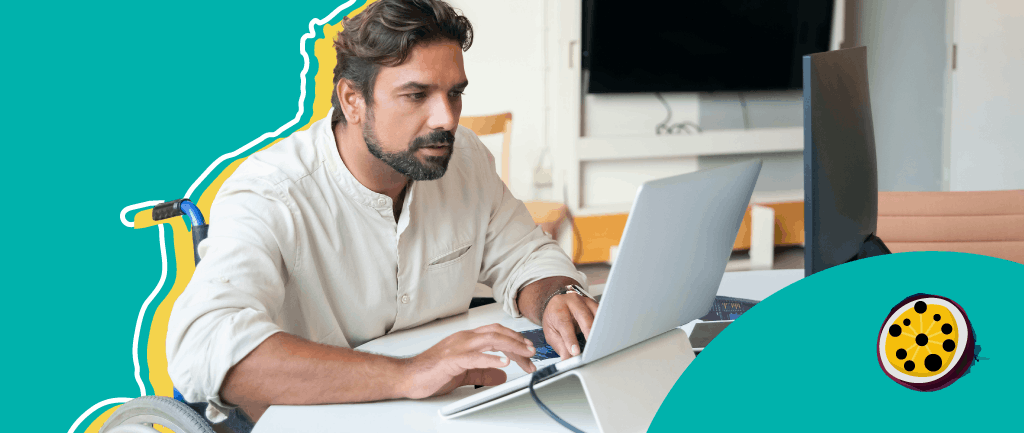
New research from the TUC has revealed that, thanks to an increasing disability pay gap, the UK’s disabled workforce will be effectively doing just that.
Double Discrimination
In recent years, we have heard much in the media about the disability employment gap.
It has remained virtually static at around thirty percentage points for the last decade, prompting the current government to make the commitment to get one million more disabled people into employment by 2027.
However, a shocking new report, published by the TUC earlier this month, has uncovered the true extent of the challenges facing the 7.6 million working-age disabled people in the UK.
The TUC claims that disabled employees are experiencing “double discrimination”, which is preventing them from reaching their career ambitions.
In other words, not only are disabled people much less likely to be in paid employment than their non-disabled counterparts, but when they are, they earn significantly less.
£1.65 per hour, less to be precise!
A deficit which places increased financial stress on disabled employees, often forcing them to go without necessities such as heating or food.
Key findings from the report
- The disability pay gap is currently 15.5%
- This represents an increase of 0.3 % in the last year alone.
- Disabled employees earn £1.65 less an hour than their non-disabled colleagues – £3.00 each year.
- This is equivalent to working the last 57 days of the year without pay. The TUC branded the 4th of November Disability Pay Gap Day.
- According to a TUC/GQR poll, 35% of disabled workers said they had to go without heating on a cold day, compared to 17 % of non-disabled workers.
Adding our voice to the TUC’s
Of course, other significant barriers hinder disabled workers from progressing in the workplace, such as poor access to education, negative attitudes and unsuitable working environments, to name just a few, but unequal pay is the one most in need of tackling.
Life already costs more if you are disabled, on average £583 extra each month, so how can it possibly be fair to subject disabled workers to another economic injustice?
To date, employers have gone completely unchallenged on this issue, and with the gap only set to increase, the time has come to make our voices heard!
As a creative agency staffed by disabled employees, we are joining with the TUC in calling for the government to introduce mandatory reporting of disability recruitment and pay gaps.
Equal pay for an equal day’s work; it is not too much to ask for, is it?
Share via social media:


You may also like...

Teaching digital accessibility early: The future of inclusive education
In this article: Why accessibility should be integrated in education...

Accessibility beyond websites: The rise of accessible everything
In today’s blog, you will read about: How digital accessibility...

Accessible Content Does Not Need to Be Dull
Who says accessible content has to be boring? Some people...

Digital Accessibility in Action: The Platforms, Creators and Advocates Amplifying Disabled Voices
As we tell anyone who will listen, creating accessible digital...

What you need to know about WCAG 3.0
October 28, 2026 , 12 pm - 1 pm GMT

Accessible images: The art of alt text
November 25, 2026 , 12 pm - 1 pm GMT

Overlays vs lived experience users: Shortcut or setback?
August 26, 2026 , 12 pm - 1 pm BST

When “Save as PDF” isn’t enough: Why accessible PDFs require knowledge, planning, testing and time
In this article, you will discover: Polished-looking PDFs are not...

Digital poverty: Its impact and strategies for the future
September 23, 2026 , 12 pm - 1 pm BST

The EAA one year on: What has really changed?
In this blog, you will read about: What has really...

The sales you never got to see and why digital accessibility could be the reason
How sales can be lost without ever appearing in your...

When accessibility is an afterthought: Voting remains a postcode lottery for disabled voters
In this blog, you will discover: How accessible voting exists...

Quick wins: 10 accessibility fixes you can implement now
In some circles, digital accessibility has a bad reputation, but...

The European Accessibility Act
A practical guide to the European Accessibility Act, explaining what...
Considering diversity in cyber security: Designing inclusive systems for disabled and neurodivergent users
Cyber security is no longer something that works away unobtrusively...

When a click becomes exhausting: The hidden mental health cost of inaccessible design
Inaccessible digital design carries a hidden mental health cost, moving...
Technical expertise built on lived experience: Why our testers notice what others miss
Authentic accessibility goes beyond technical terminology or compliance with legal...

Exploring assistive tech in cyber security tools
With CYBERUK 2026 on the horizon, Net-Defence and Passion4Social CIC...

Who is being left behind? The entry point is digital
Digital inaccessibility is a significant structural barrier that widens the...

When accessibility is an afterthought: Patients pay the price
Government organisations and institutions spend millions on cybersecurity, protecting their...


