• Skip to main content

Passion4Social

  • Home
  • Our Services
    • All Accessibility Services
    • Accessibility Audit Services
    • Accessibility Overlay
    • Accessible Websites
    • Accessible Marketing and Comms
    • FAQs
  • Our Impact
    • Impact
    • Impact reports
    • Our story
    • Our team
    • Join our Board
    • Lived Experience freelancers wanted
  • Engage and Learn
    • Free webinars
    • Blog
    • Ebooks
  • Contact
You are here:
Engage and learn - When a click becomes exhausting: The hidden mental health cost of inaccessible design
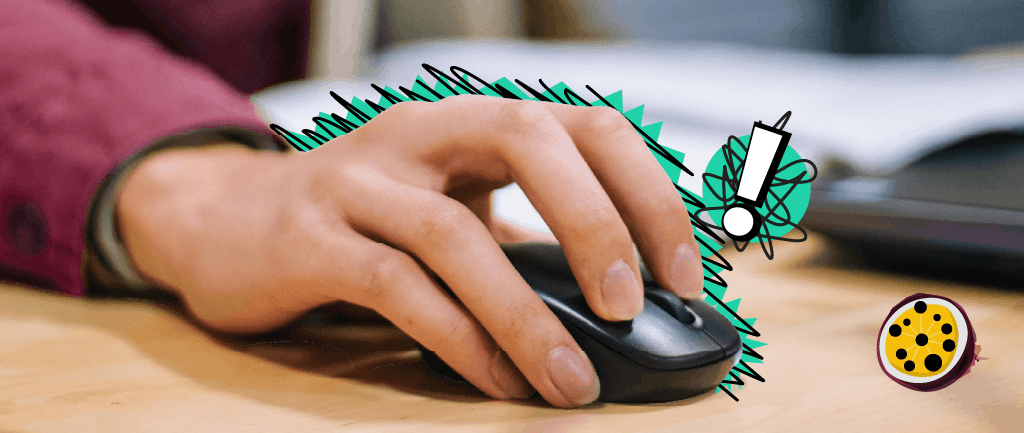
A hand using a computer mouse and a white exclamation mark are outlined with green and black jagged shapes. Passion4Social (logo).

When a click becomes exhausting: The hidden mental health cost of inaccessible design

Passion4Social

April 20, 2026

Est 5 min

Inaccessible digital design carries a hidden mental health cost, moving beyond mere inconvenience to create cognitive overload, frustration, and mental fatigue.

This stress is often unmeasured and is particularly amplified for people who are neurodivergent or have disabilities, turning simple tasks into significant barriers.

Accessible design offers relief by reducing the mental effort required for digital interactions, ultimately improving well-being for everyone.

When companies invest in accessibility, it demonstrates empathy and a commitment to respecting users’ time and energy.

Ultimately, accessibility is the responsibility of designers and developers, focusing not just on whether a system “works,” but on whether it makes people’s lives easier.

It was just a simple form, or at least, that is how it seemed on the surface.

You open the website because you need to sort something out quickly: maybe book an appointment at short notice, apply for a job before the submission deadline, or get that last-minute birthday present.

Then it starts.

The buttons are not clearly labelled, the instructions are confusing, and one field shows an error, but you can’t work out why.

You go back, try again, sigh, and, without noticing, something changes: your patience decreases, frustration increases, and that simple task starts to feel exhausting.

Now imagine living this every day.

That is the invisible impact of design on our mental health.

a person sitting at a desk in front of an open laptop computer with both hands raised to their temples and a frustrated expression.

The stress no one measures

When we talk about wellbeing, we think about routine, nutrition, or rest, but we rarely talk about wellbeing in the digital environment.

We should.

Poorly designed digital experiences create cognitive overload, going beyond mere inconvenience.

Every doubt, unexplained error, or user path that does not feel intuitive requires additional mental effort.

For a person without a disability, this is already tiring.

For a person with a disability or who is neurodivergent, this effort can be amplified significantly.

What may seem like a minor inconvenience for some is, in fact, a real barrier for others.

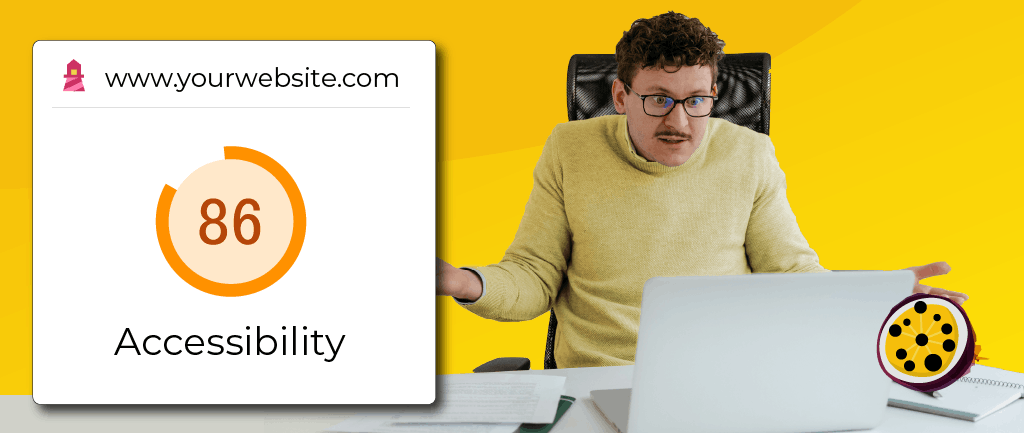
a person sitting at a desk, shrugging their shoulders with open palms and a confused expression.

The difference between “it works” and “it works well”

A website can be technically functional and still be exhausting.

Think about it: have you ever given up filling in an online form because it was too complicated, or felt irritated trying to find simple information?

What about the times you have closed a page because it just wasn’t worth the effort?

These experiences are more common than they seem, and they create a silent cycle:

  • Frustration
  • Mental fatigue
  • Abandonment

Now, take a moment and reverse the scenario.

If you encounter a website with visible buttons, simple instructions, and intuitive navigation, you do not dwell on the experience.

You simply manage to do what you need to, and yes, this too is wellbeing.

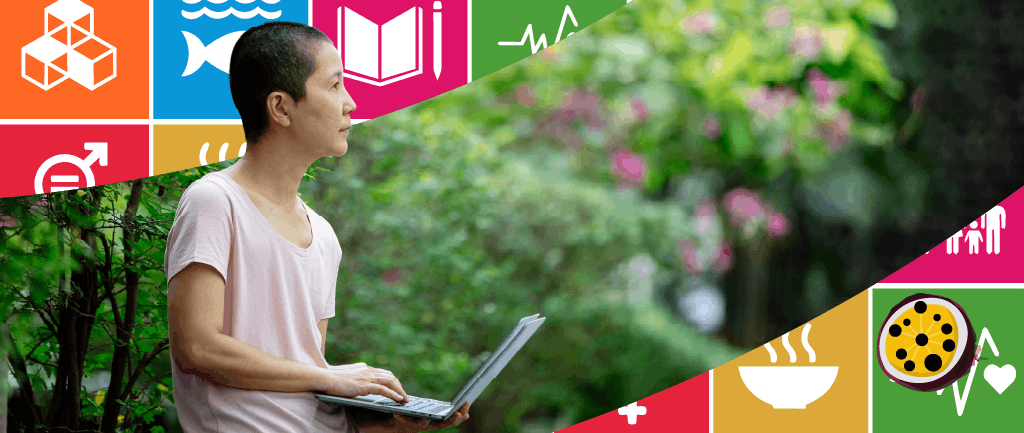
a smiling person sitting cross-legged in front of an open laptop computer, gesturing animatedly.

Accessibility is relief

There is a common myth that digital accessibility only benefits a minority, but in practice, it is a positive step forward for everyone.

Captions help those in noisy environments.

Proper contrast helps on days when you have visual fatigue.

Clear text helps when we are in a hurry or distracted.

Above all, accessible interfaces reduce the mental effort required to interact with digital environments.

They make the experience lighter, more fluid, and more human.

Imagine this: you are tired after a long day and need to sort something simple on your phone before switching off.

Yet when you load the website, the text is too small to read without straining your eyes, and the contrast between the background and text is poor, making the effort of concentrating give you a headache.

You miss out a digit in your phone number, and then, when you fix that, you forget to click the terms and conditions checkbox.

What was a simple task has become a source of stress, and it is not because you don’t know how to use technology, but because the technology was not designed to make your life easier.

See?

That’s the point.

Accessibility is the responsibility of designers and developers, not the user.
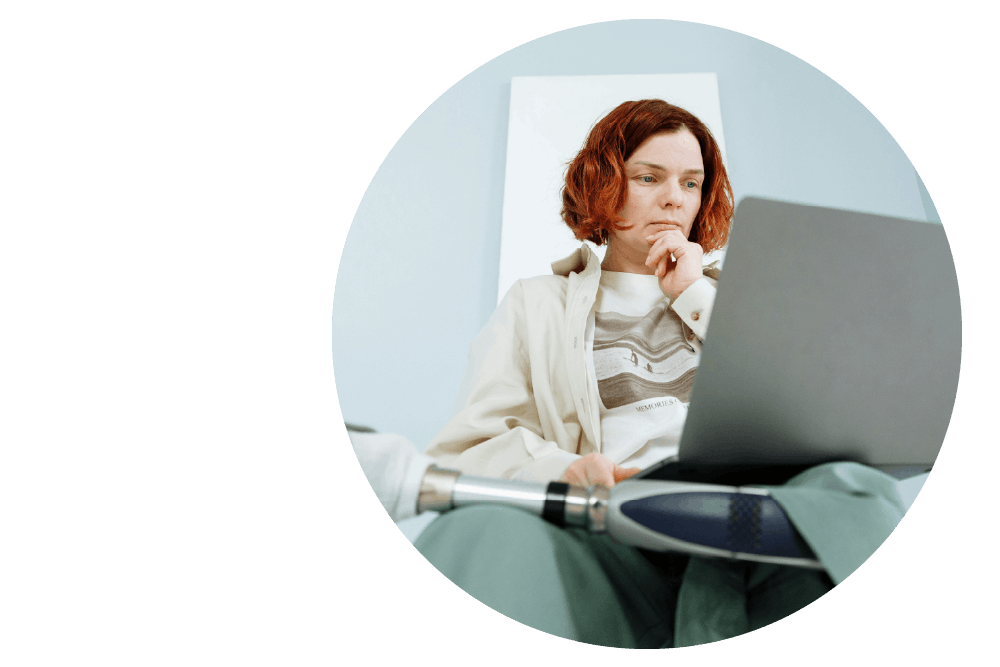
a person with a prosthetic limb, sitting with their legs crossed and an open laptop computer in their lap. They have one hand raised to their chin with a thoughtful expression.

Accessible design is care at scale

When a company invests in accessibility, it is not just following good practice.

The company is saying:

  • “We want you to succeed.”
  • “We want this to be easy for you.”
  • “We want to respect your time and your energy.”

That is empathy in action, and in a world where everything competes for our attention, reducing friction is one of the most powerful forms of care.

a person looking upwards thoughtfully while signing with one hand close to their face.

What people really want, but don’t know how to say

At the end of the day, no one enters a website thinking about accessibility.

People want to succeed, understand, resolve and move forward.

No stress or unnecessary effort.

That is exactly what accessible design provides.

three people embracing each other and smiling widely.

Less effort, more humanity

If digital is part of our lives every day, then it also impacts our mental health every day.

That said, the question is no longer “does this work?” but “is this making people’s lives easier or more difficult?”

In the end, accessibility is about how people feel while trying to access, not just about access itself.

That is why we work every day to help people, organisations, and businesses move away from inaccessible design through our services focused on a truly accessible and inclusive digital environment.

If everything you’ve read has sparked the desire to do things differently, get in touch with us.

Our team of specialists is ready to help you build a better and fairer digital world.

Share via social media:

FacebookLinkedIn

You may also like...

Articles & Guides
A dark grey, textured ground surface with a painted yellow accessibility icon. Painted yellow text reads: ‘Accessibility beyond websites.’ Passion4Social (logo).

Accessibility beyond websites: The rise of accessible everything

In today’s blog, you will read about: How digital accessibility...

Accessibility Digital Inclusion
Read article Accessibility beyond websites: The rise of accessible everything
Articles & Guides
Accessibility does not need to be dull – Quiz

Accessible Content Does Not Need to Be Dull

Who says accessible content has to be boring? Some people...

Quiz Accessibility Digital Inclusion
Read article Accessible Content Does Not Need to Be Dull
Articles & Guides
Amplifying disabled voices — Disability Pride Month, illustrated with a megaphone graphic

Digital Accessibility in Action: The Platforms, Creators and Advocates Amplifying Disabled Voices

As we tell anyone who will listen, creating accessible digital...

Accessibility Digital Inclusion
Read article Digital Accessibility in Action: The Platforms, Creators and Advocates Amplifying Disabled Voices
Upcoming free webinar
What you need to know about WCAG 3.0

What you need to know about WCAG 3.0

October 28, 2026 , 12 pm - 1 pm GMT

WCAG Accessibility Digital Inclusion
Register What you need to know about WCAG 3.0 (Opens in a new window)
Upcoming free webinar
A person holding an SLR camera up to their eye, looking through the lens and smiling against a teal background with a halftone pattern and purple circles. Text reads: ‘Accessible images: The art of alt text. Wednesday 25th of November, 12 pm GMT.’ Passion4Social (logo).

Accessible images: The art of alt text

November 25, 2026 , 12 pm - 1 pm GMT

Accessibility Digital Inclusion
Register Accessible images: The art of alt text (Opens in a new window)
Upcoming free webinar
A person with a prosthetic arm, posing confidently with their arms crossed and a warm smile against a pink background. Text reads: ‘Overlays vs lived experience users: Shortcut or setback? Wednesday 26th of August, 12 pm BST.’ Passion4Social (logo)

Overlays vs lived experience users: Shortcut or setback?

August 26, 2026 , 12 pm - 1 pm BST

Accessibility Digital Inclusion
Register Overlays vs lived experience users: Shortcut or setback? (Opens in a new window)
Articles & Guides
A person using a laptop computer at a wooden desk. Overlapping the laptop screen is a grey and white sad face graphic and a pink document graphic that reads: ‘PDF’. Passion4Social (logo).

When “Save as PDF” isn’t enough: Why accessible PDFs require knowledge, planning, testing and time  

In this article, you will discover: Polished-looking PDFs are not...

PDFs Accessibility
Read article When “Save as PDF” isn’t enough: Why accessible PDFs require knowledge, planning, testing and time  
Upcoming free webinar
A person holding a mobile phone and looking down at the screen with a serious expression against a teal background. Text reads: Digital poverty: Its impact and strategies for the future. Wednesday 23rd of September, 12 pm BST. With guests: Department for Work & Pensions, Lead Scotland. Passion4Social (logo)

Digital poverty: Its impact and strategies for the future

September 23, 2026 , 12 pm - 1 pm BST

Digital Inclusion
Register Digital poverty: Its impact and strategies for the future (Opens in a new window)
Articles & Guides
A laptop computer open on a desk. The screen displays the flag of the European Union with a white accessibility icon and ‘EAA’ at the centre. Passion4Social (logo).

The EAA one year on: What has really changed?

In this blog, you will read about: What has really...

Accessibility
Read article The EAA one year on: What has really changed?
Articles & Guides
A yellow background with a shopping cart. A white bar with a cursor reads: ‘Continue?’

The sales you never got to see and why digital accessibility could be the reason

How sales can be lost without ever appearing in your...

Accessibility
Read article The sales you never got to see and why digital accessibility could be the reason
Articles & Guides
When accessibility is an afterthought – Part 5" — hand placing a ballot in a box

When accessibility is an afterthought: Voting remains a postcode lottery for disabled voters

In  this blog, you will discover: How accessible voting exists...

Accessibility
Read article When accessibility is an afterthought: Voting remains a postcode lottery for disabled voters
Articles & Guides
Graphic with the text '10 quick accessibility wins' alongside a universal accessibility icon

Quick wins: 10 accessibility fixes you can implement now

In some circles, digital accessibility has a bad reputation, but...

Accessibility
Read article Quick wins: 10 accessibility fixes you can implement now
Accessibility Digital Inclusion
ebook cover for The European Accessibility Act

The European Accessibility Act

A practical guide to the European Accessibility Act, explaining what...
Download The European Accessibility Act
Articles & Guides
A man using a laptop is surrounded by eyes looking at his screen. There are location icons, speech bubbles and locks to symbolise online security. Lead Scotland and Passion4Social logos

Considering diversity in cyber security: Designing inclusive systems for disabled and neurodivergent users

Cyber security is no longer something that works away unobtrusively...
Cybersecurity
Read article Considering diversity in cyber security: Designing inclusive systems for disabled and neurodivergent users
Articles & Guides
A person using a wheelchair while working on an open laptop computer against a teal background. Passion4Social (logo).

Technical expertise built on lived experience: Why our testers notice what others miss

Authentic accessibility goes beyond technical terminology or compliance with legal...

Read article Technical expertise built on lived experience: Why our testers notice what others miss
Articles & Guides
Illustrative depiction of neurodiversity showing colourful silhouettes of people and outlines of the human brain. Passion4Social (logo)

Exploring assistive tech in cyber security tools

With CYBERUK 2026 on the horizon, Net-Defence and Passion4Social CIC...

Accessibility Digital Inclusion
Read article Exploring assistive tech in cyber security tools
Articles & Guides
A group of three diverse women gathered around an open laptop computer, looking down at the screen and smiling. Passion4Social (logo)

Who is being left behind? The entry point is digital

Digital inaccessibility is a significant structural barrier that widens the...

Accessibility Digital Inclusion
Read article Who is being left behind? The entry point is digital
Articles & Guides
The torso of a person wearing a stethoscope around their neck and green medical scrubs. Bold black text against a yellow background reads: Patients pay the price

When accessibility is an afterthought: Patients pay the price

Government organisations and institutions spend millions on cybersecurity, protecting their...

Accessibility
Read article When accessibility is an afterthought: Patients pay the price
Articles & Guides
A person holding a laptop computer. They are looking at the screen, smiling widely and pumping their fist as if in celebration. A laptop graphic displaying a computer window reading ‘Accessibility Statement’. A graphic with two hands adjusting settings on the screen of a tablet device. 

Changing the narrative: All you need to know about accessibility services at Passion4Social

Once hailed as the great equaliser, the web has become...

Read article Changing the narrative: All you need to know about accessibility services at Passion4Social
Articles & Guides
A smiling person wearing a yellow jumper, with one hand raised to their face against a purple heart shape and a pink background. Text reads: ‘When accessibility is an afterthought: Cupid’s arrow never flies true.’.

When accessibility is an afterthought: Cupid’s arrow never flies true

Love was never the problem. Every February, the world fills...

Read article When accessibility is an afterthought: Cupid’s arrow never flies true

Ready to take action?

The sooner you start on your accessibility journey, the sooner everyone can benefit from your inclusive online presence.

Start your accessibility journey
People and planet first logo with text underneath stating Verified social enterprise
Living hours employer logo
Cyber essentials certified logo
RNIB visibly better logo
Disability confident employer logo
Living wage employer logo
Edinburgh social enterprise network logo
Scottish union of supported employment SUSE logo
social firms Scotland logo
The good stuff community Edinburgh logo
National lottery community fund logo
Gsen Glasgow Social Enterprise Network logo
p4s_section-3_logo-ses

Back to top

Let's Connect

01506 353625 enquiries@passion4social.com

Copyright © 2025 Passion4Social

Socials

Subscribe
  • Privacy Policy
  • Terms and conditions
  • Sitemap
  • Accessibility Statement
Manage Cookie Consent
To provide the best experiences, we use technologies like cookies to store and/or access device information. Consenting to these technologies will allow us to process data such as browsing behaviour or unique IDs on this site. Not consenting or withdrawing consent, may adversely affect certain features and functions.
Functional Always active
The technical storage or access is strictly necessary for the legitimate purpose of enabling the use of a specific service explicitly requested by the subscriber or user, or for the sole purpose of carrying out the transmission of a communication over an electronic communications network.
Preferences
The technical storage or access is necessary for the legitimate purpose of storing preferences that are not requested by the subscriber or user.
Statistics
The technical storage or access that is used exclusively for statistical purposes. The technical storage or access that is used exclusively for anonymous statistical purposes. Without a subpoena, voluntary compliance on the part of your Internet Service Provider, or additional records from a third party, information stored or retrieved for this purpose alone cannot usually be used to identify you.
Marketing
The technical storage or access is required to create user profiles to send advertising, or to track the user on a website or across several websites for similar marketing purposes.
  • Manage options
  • Manage services
  • Manage {vendor_count} vendors
  • Read more about these purposes
View preferences
  • {title}
  • {title}
  • {title}